
How To Get NIRSAL Agribusiness Funding
June 16, 2026, 11:19 am
The Nigeria Incentive-Based Risk Sharing System for Agricultural Lending (NIRSAL Plc.) is a $500 million non-bank financial institution that is entirely owned and managed by the Central Bank of Nigeria.
It is intended to redefine, dimension, measure, re-price, and share with investors and financiers the credit risk associated with agribusiness. NIRSAL specializes in agribusiness project development, financial facilitation, and agricultural risk management.
Through creative concepts and in-house Tools, Techniques, Methodologies, and Partnerships (TTM&Ps), NIRSAL optimizes agriculture and agribusiness, integrates agricultural value chains, facilitates financing and investments, and manages agricultural risks.
Key Functions of NIRSAL in the Nigerian Agriculture Sector
NIRSAL was established to stimulate the flow of affordable finance and investments into the agricultural sector by de-risking the agribusiness finance value chain, repairing agricultural value chains, building long-term capacity, and institutionalizing incentives for agricultural lending through its five (5) strategic pillars, which are:
Risk Sharing
This pillar addresses banks’ perception of high- risks in the sector by sharing credit risks and losses with providers of finance and investments (up to 75% of loss incurred). The credit capacity of this pillar is $300 million

Insurance
This pillar’s primary goal is to expand insurance coverage for agriculture by developing new innovative insurance products beyond indemnity-based insurance to include weather index, area yield index, new variants of pest and disease insurance, etc. The coverage capacity of this pillar is $30 million

Technical Assistance
This pillar is focused on building the capacity of financial institutions and agricultural value chain players for improved performance. It is also focused on interventions to fix broken agricultural value chains. The technical capacity of this pillar is $60 million

Incentives
This pillar rates lenders and agricultural value chain actors based on their effectiveness and social impact. The incentive capacity of this pillar is $10 million
Rating
This pillar is aimed at rewarding value-added performance by agricultural value chain actors, financiers and investors. The rating capacity of this pillar is $100 million

NIRSAL Agribusiness Sector Funding Focus
The Nigerian Agriculture sector is vast and comprises of several types of farming activities. However, not all these farming activities carry the same strategic advantage for the Nigerian economy. As a result of this, only certain farming activities are eligible to receive funding from NIRSAL.
These are the agriculture commodities and farming activities that NIRSAL gives priority to:Billi
- Integrated Livestock Commodity
Beef, Dairy, Hides and Skin in integrated ranch fodder bank and feedlot production (RaFF) systems

- Controlled Environment Agriculture Commodities
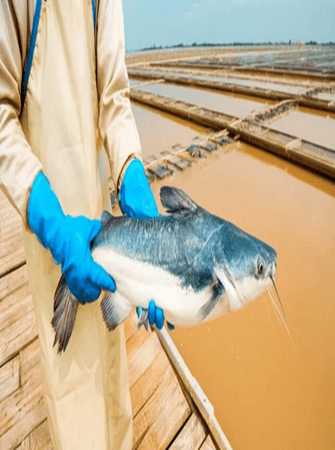
Fresh Fruits and Vegetables (Tomato, Onions, etc.) and Aquaculture or Fish Farming (in Fish Estates)—Youth driven Controlled Environment Agricultural Production Systems in 36 State Capitals and the FCT
3. Consumer Commodities
a. Rice farming
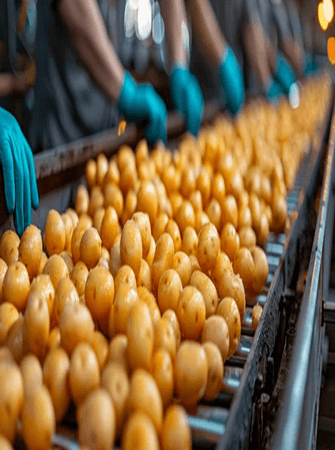
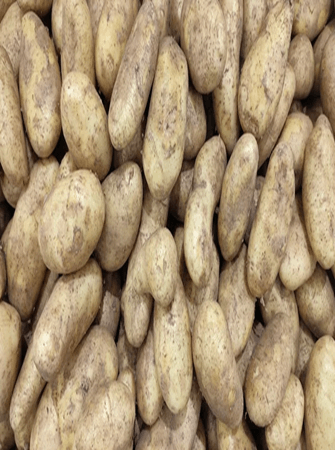
b. Potato farming (sweet and Irish)
c. Bean farming
4. Export Commodities
a. Value-added Hibiscus
b. Value-added Sesame
c. Value-added Ginger
d. Value-added Shea
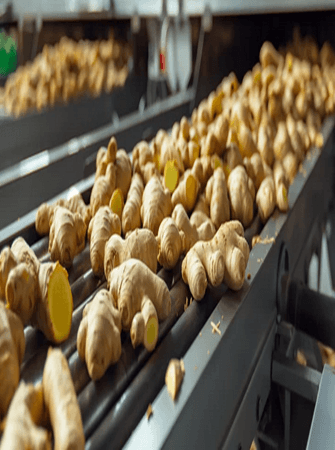
Value-added means you must perform some processing on the crops before exporting and not just export the crop in its raw form. Some processing options you can do are drying, chipping, peeling, powdering etc.
5. Industrial Commodities
e. Cotton farming
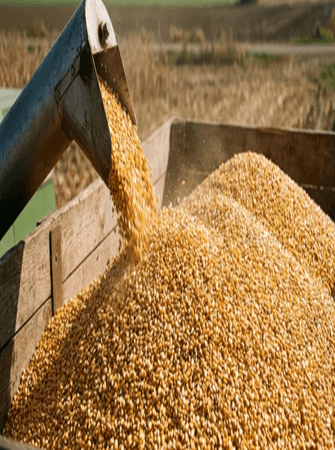
In addition to the above, Sugarcane and Value-added cashew is also a focus of NIRSAL funding objective
How To Get NIRSAL Agribusiness Funding
NIRSAL provides funding to the Nigerian Agriculture Sector through the following services:
Credit Risk Guarantee (CRG)
The core service offered by NIRSAL is the Credit Risk Guarantee (CRG). The CRG is a tool designed to protect financiers and investors from potential losses in a finance or credit transaction. Through a risk-sharing arrangement, NIRSAL pays back the lender or investor for principal and accrued interest up to a predetermined CRG rate.

Features and Benefits of CRG
The NIRSAL CRG covers credit in the form of term loans, and debt instruments such as short, medium, and long term notes including the risk of defaulting on loan principal and accrued interest.
CRG cover ranges from 30%-75% depending on the borrower's agricultural value chain (AVC) segment.
The purchase of a CRG from NIRSAL requires the upfront payment of a guarantee fee of 1% on the loan value and subsequent outstanding balances of the loan, credit line, bond issue or related instrument, annually
The NIRSAL CRG covers the Pre-Upstream, Upstream, Midstream and Downstream segments of the AVC.
It encourages the flow of finance and investment into agriculture and ensures the reduction of risk for the investor, financial institution or counterparty
Qualification for the CRG
The table below breaks down CRG coverage categories:
| CATEGORY | SINGLE OBLIGOR LIMIT (NGN) | CRG COVER |
| Smallholder farmers and farmer groups | 5 Million | 75% of the loan |
| Cooperatives | 50 Million | 75% of the loan |
| Large Scale Primary Producers | 2 Billion | 50% of the loan |
| Mechanization | 50 Million | 75% of the loan |
| Large Scale Mechanization | 2 Billion | 50% of the loan |
| Processors | 2 Billion | 50% of the loan |
| Integrated Farms | 2 Billion | 30% of the loan |
| Logistics Providers | 2 Billion | 30% of the loan |
| Agro dealers, Input and Equipment suppliers | 2 Billion | 30% of the loan |
NIRSAL CRG Application Process
These six steps are used to apply for CRG service from NIRSAL:
- Farmer/Agribusiness applies for a loan from a Commercial Bank or any Financier and requests for NIRSAL CRG cover
- Financier / Bank approves the loan and sends CRG request and relevant documents to NIRSAL on behalf of the farmer/agribusiness.
- NIRSAL reviews CRG request and checks documents for completeness, accuracy and validity.
- If documents are in order, NIRSAL and Financiers conduct farm/site visitation and prepare a report which is subjected to NIRSAL’s internal approval process.
- Upon approval by NIRSAL and payment of CRG & PMRO fees, NIRSAL issues CRG in favour of the Financier on behalf of the farmer/agribusiness
- Financier disburses the loan to farmer/agribusiness and NIRSAL commences project monitoring through its nationwide Project Monitoring, Reporting and Remediation Offices (PMRO)
NIRSAL Interest Drawback Scheme (IDB)
In order to minimize the burden of interest payments, NIRSAL Plc offers the IDB, an interest payment support program, to borrowers who are in good standing and make timely loan repayments.

Features and Benefits of IDB
Every NIRSAL CRG-backed loan qualifies, in principle, for IDB consideration. However, NIRSAL Plc reserves the right to determine who receives its IDB support
It is an incentive to reduce the burden of interest payment and encourage timely repayment of loans
IDB is paid every 90 days (per quarter) within the life of the loan, provided the borrower is in good standing (all principal and interest payments are up to date, per the original or amended payback schedule agreed upon between NIRSAL Plc, lender and borrower).
IDB covers up to 40% of interest paid on NIRSAL CRG-backed agribusiness loans
IDB stops upon default, till all past obligations are remedied.
The interest draw back payable to borrowers will be as follows:
| CATEGORY | SINGLE OBLIGOR LIMIT (NGN) | CRG COVER | IDB PAYABLE ON FACE VALUE OF LOAN |
| Smallholder farmers and farmer groups | 5 Million | 75% of the loan | 40% |
| Cooperatives | 50 Million | 75% of the loan | 40% |
| Large Scale Primary Producers | 2 Billion | 50% of the loan | 20% |
| Mechanization | 50 Million | 75% of the loan | 40% |
| Large Scale Mechanization | 2 Billion | 50% of the loan | 20% |
| Processors | 2 Billion | 50% of the loan | 20% |
| Integrated Farms | 2 Billion | 30% of the loan | 20% |
| Logistics Providers | 2 Billion | 30% of the loan | 20% |
| Agro dealers, Input and Equipment suppliers | 2 Billion | 30% of the loan | 20% |
NIRSAL Financing Frameworks
NIRSAL Plc's financing frameworks address working capital constraints associated with specific segments of agricultural value chains and facilitate finance to transactions that fulfil the terms of underlying agribusiness models that are pre-agreed between NIRSAL and financial institutions under the NIRSAL CRG.

NIRSAL's financing frameworks provide a de-risked financing arrangement for the flow of funds from financiers and investors to target agricultural value chain actors under clear transaction dynamics)
The carefully identified financing gaps within agricultural value chain segments provide useful information for potential investors in making investment decisions and facilitates the development of business proposals for projects
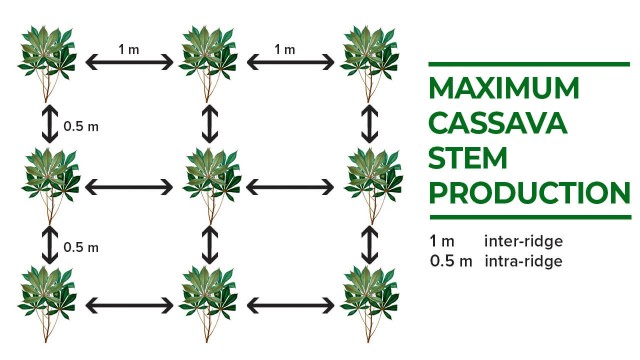
NIRSAL collaborates with financial institutions for the joint development of financing products and instruments. The following are some financing frameworks that NIRSAL operates with: Fertilizer, Mechanization, Grains, Fresh Fruit & Vegetable (FFV), Livestock, Cotton, Grains, Cassava, Cocoa, Poultry and Agro Geo-Cooperative (AGC) financing frameworks



Share This Article: