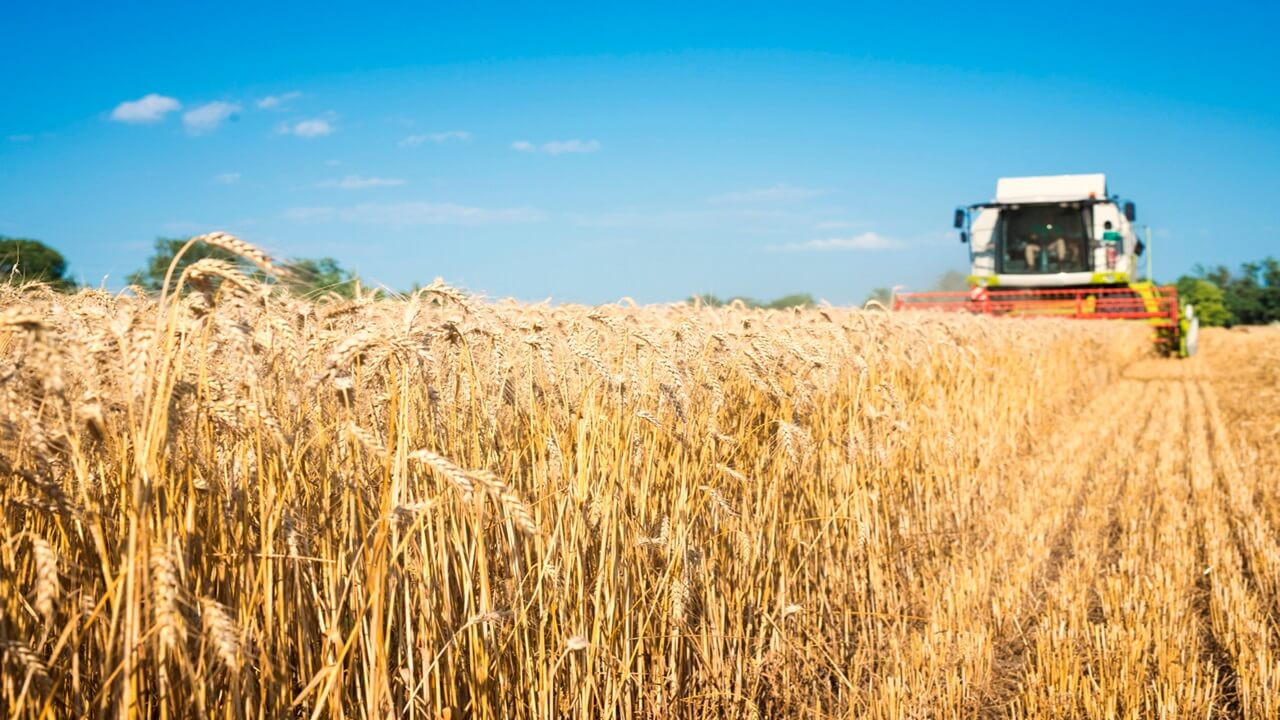
Successful Wheat Farming in Nigeria Guidelines
December 9, 2025, 1:58 pm
Wheat is a crucial ingredient in the world's food supply. Wheat can be comfortably classified among the oldest grain crops grown by man worldwide.
Wheat is a staple food which is used by all nations and cultures hence probably grown in all the continents of the world.
Wheat Demand in Nigeria
In Nigeria, the demand of wheat, especially by youths and urban dwellers, is on the increase as a result of the growing population that consume it in the form of noodles, pasta (spaghetti and macaroni), bread, semolina etc.
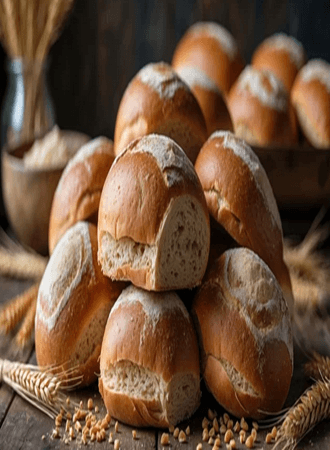
For decades, Nigeria has depended on imported wheat to meet the growing demands of its large population. The annual domestic consumption of wheat is over 5,000,000 MT but national production is less than 200,000 MT annually. Nigeria spends over $2.0 billion annually on wheat importation so domestic production of wheat must be encouraged.
SUCCESSFUL WHEAT FARMING IN NIGERIA
Locations in Nigeria between latitudes 10° and 14°N are typically ideal for commercial wheat farming, under irrigation between November and March, when nighttime temperatures typically range from 15° to 20° C.
Due to its weather requirements, thirteen states in Nigeria are most suitable for wheat farming. These states are Borno, Yobe, Gombe, Bauchi, Jigawa, Kano, Katsina, Zamfara, Kebbi, Sokoto, Plateau, Kaduna and Adamawa
WHEAT FARMING SITE SELECTION
Choice of land is a prerequisite for high productivity of wheat. Therefore, knowledge of the climate, soil, water availability, and land access is necessary before choosing a piece of land.
For successful wheat farming, select a good, well-drained fertile sandy, loamy to heavy clay soil (vertisol) with good internal drainage. Ensure that the site is close to water source, for adequate irrigation throughout the season. Soil testing and avoidance of waterlogged areas are necessary for good wheat productivity.

WHEAT FARMING LAND PREPARATION
This involves clearing of stumps and residues, tillage, leveling, and layout of irrigation basins or beds, canals or furrows. Good land preparation ensures that irrigation water is efficiently applied, effectively drained and waterlogging avoided. It also ensures the control of weeds, pests, diseases and encourages maximum and uniform seedling emergence.
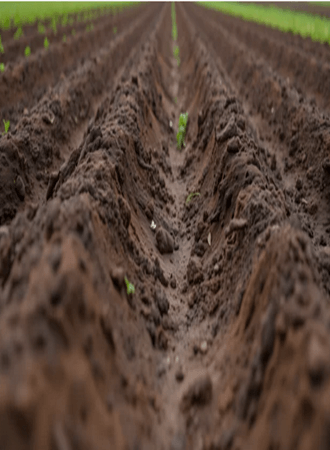
Good land preparation also permits easy access, extraction of water and nutrients from the soil and aeration by the wheat "seminal roots" which develop at early seedling germination time and the "nodal" crown or adventitious roots. These are essential for healthy plant growth
Mechanization with tractors and implements is critical during land preparation. This ensures good land preparation, reduces drudgery and affords the farmer the leverage to cultivate large expanse of land. Full tillage pulverizes the soil and breaks large clods or sods, while minimal tillage limits soil disturbance to the surface layers. It is important to avoid over-tilling as it results in surface-crusting and delayed planting after land preparation as this allows weeds re-growth.

Land preparation should commence in early October. Ensure that the land is well-leveled, with gentle slope (0.5 m/100 m) in order to avoid water accumulation. Use plough and double cross harrow for destruction of perennials and deep-rooted weeds, while providing a fine textured top soil, which is a requirement for good germination of wheat.
Recommended basin size is 5 m x 5 m for loamy and larger basins of 5 m x 10 m for clay soils.
RECOMMENDED WHEAT VARIETIES
The genetic make-up of the wheat variety sets the limit for the yield attainable under the most conducive growth conditions and management.
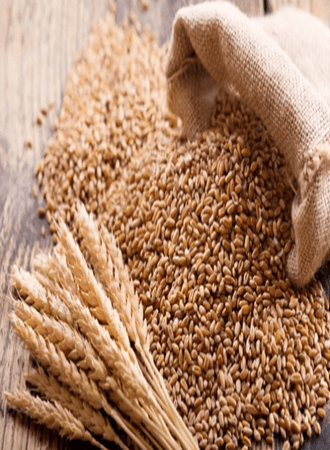
The national mandate for genetic improvement of wheat resides with the Lake Chad Research Institute, as established by Decree 1973 No. 35: Research Institutes (Establishment Order in 1975). Following the establishment of strong collaboration with CIMMYT, ICARDA, IAR, SG2000 and funding support from African Development Bank (AfDB), the Lake Chad Research Institute has so far released eleven (11) wheat varieties, with improved yields from 3.0 - 7.5 t/ha.
These varieties and their yields are listed in the table below:
|
VARIETY |
YEAR OF RELEASE |
YIELD POTENTIAL |
|
LACRIWHIT-1 (Seri M82) |
1998 |
2.0 - 3.0 t/ha |
|
LACRIWHIT-2 (Cettia) |
2005 |
3.5 - 4.0 t/ha |
|
LACRIWHIT-3 (Linfen) |
2005 |
3.5 - 4.0 t/ha |
|
LACRIWHIT-4 (Atilla-Gan-Atilla) |
2008 |
4.0 - 4.5 t/ha |
|
LCRIWHIT-5 (Norman) |
2014 |
5.0 - 6.0 t/ha |
|
LCRIWHIT-6 (Reyna 28) |
2014 |
5.0 - 5.5 t/ha |
|
LACRI WHIT-7 (Reyna 15) |
2015 |
4.0 - 5.0 t/ha |
|
LACRI WHIT-8 (Crow's') |
2015 |
4.0 - 4.5 t/ha |
|
LACRIWHIT-9 (Pastor) |
2016 |
6.0 - 7.0 t/ha |
|
LACRIWHIT-10 (Kauz) |
2016 |
6.5 - 7.5 t/ha |
|
LACRIWHIT-11 (Imam) |
2019 |
5.6 - 7.1 t/ha |
The finest options available right now are LACRIWHIT-4 (Atilla-Gan-Atilla), LCRIWHIT-5 (Norman), LCRIWHIT-6 (Reyna 28), LACRIWHIT 9 (Pastor), LACRIWHIT 10 (Kauz), LACRIWHIT-11 (Imam) for irrigation farming. While LACRI WHIT-7 (Reyna 15), LACRI WHIT-8 (Crow's') are best suited for rain-fed production.
All the varieties above are semi-dwarf in height and mature in less than 90 days, except LCRIWHIT-5 (Norman) that matures in 120 days. All the wheat varieties are heat tolerant, high yielding and have good baking quality.
WHEAT FARMING PEST AND DISEASES
Nigeria has both irrigated and rain-fed wheat production conditions. However, commercial farming of wheat takes place mainly under irrigation.
Insects directly cause injury by feeding on the wheat and thus predispose plants to infection by diseases.
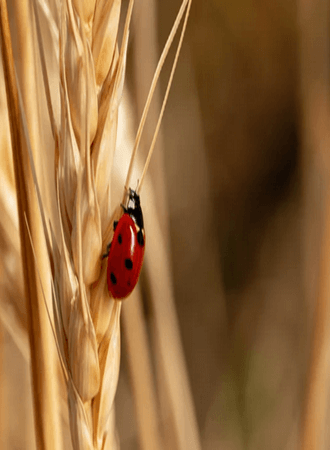
The major field insect pests of wheat farming in Nigeria are:
- Harvester ants (Messor gala): they remove sown seeds thereby reducing plant population
- Stemborer (Sesemia calamistis): they bore into the stem causing dead hearts and white heads
- Termites (Macrotermes species): they burrow into the crown and cause the plants to lodge
The major vectors of viruses in wheat farming are:
- Green bugs (Schizaphis graminis) which inject toxic substances resulting in spots and blotches
- Aphids (Rhopalosiphum maisis) that transmit yellow dwarf mosaic virus causing chlorosis, yellowing and dwarfing
- Leafhoppers (Endria inimica and Elymana virescens, Cicadulina pastusae) that transmit American wheat striate mosaic causing chlorotic streaks along the veins, stunting, sterile spikes and gall formation.
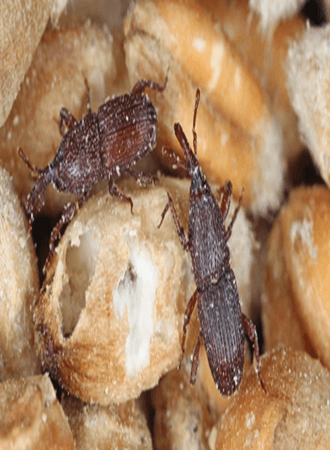
Weevils and grain borers are particularly destructive during storage.
Diseases constitute serious threat to the production of wheat under rainfed conditions. Diseases significantly reduce the yield and quality of wheat, causing losses as high as 50%, and should be controlled from the onset at crop establishment.
Major wheat disease pathogens of wheat farming in Nigeria include
- Helminthosporium sativum cause blotches, stripes, foot rots, stem decay and seedling and head blights. Seed treatment fungicides such as Apron Star and Mancozeb are effective in managing them.
- Septoria species (S. tritici and S. nodorum) cause leaf spots and glume blotches. Crop rotation is recommended in areas with severe epidemics of such diseases.
- Puccinia rust pathogen infections [P. graminis (stem rust), P. recondita (leaf rust) and P. striiformis (stripe rust)] cause destructive reddish brown pustules and yellow stripes. Rust diseases are effectively controlled by use of resistant varieties and eradication of alternative hosts.
Pre-sowing seed treatment (seed dressing) is the cheapest means of pest and disease control, which confers protection to emerging seedlings against soil pests and diseases for at least three weeks. Seeds should be treated with seed dressing chemicals to avoid loss of seeds and seedlings by harvester ants and birds, which results in poor crop establishment.
The rate for seed treatment is 10 g/kg of seed. This also confers protection against fungus, nematodes, stem borers, termites and some soil borne insects, and birds.
WHEAT FARMING SEED RATE
Seed rate is the quantity of seed planted per hectare to ensure optimum density of plants for maximum yield. The recommended seed rate for wheat is 100 kg/ha, for drilling and 120 kg/ha for broadcasting, to ensure higher yield.
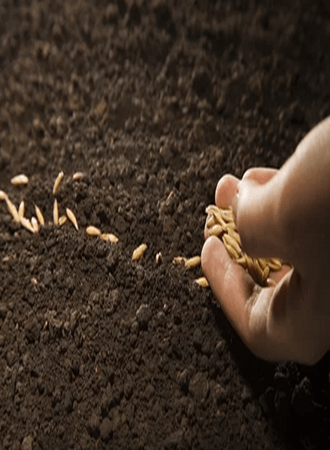
Using higher seed rate than those recommended will lead to severe competition amongst seedlings for water, nutrients and sunlight, thereby resulting in low grain quality and yield.
WHEAT FARMING SOWING DATE
Wheat requires average temperature of 20°C, especially during tillering, flowering and grain filling. Such cool temperatures, which are favourable for the growth and development of the crop, occurs during the harmattan period from mid-November to mid-March in northern Nigeria.
Therefore, the recommended planting date is middle of November (15th) to middle of December (15th). Research results have shown that yields were significantly reduced when wheat were sown beyond mid-December. The recommended sowing date for rainfed wheat in Nigerian highlands is mid-July to mid-August.
WHEAT FARMING SOWING METHOD
Wheat seeds are sown either by drilling, dibbling or broadcasting methods. Drilling in rows of 20 - 30 cm apart is recommended, and this can be done manually or by using seed drills (seed planters). Broadcasting should be done evenly and seeds raked into the soil thoroughly for good germination and stand establishment.
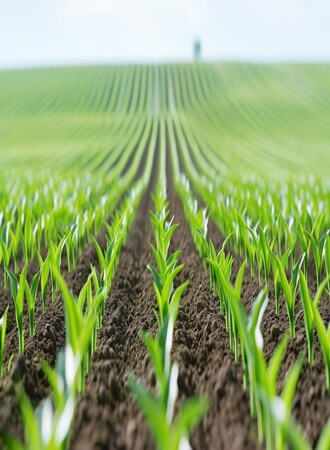
However, research results indicated that drilling method produces higher yield than broadcasting. Also, raised-bed technology (machines) have been found to remarkably increase wheat yield by more than 20%.
WHEAT FARMING FERTILIZER RATE
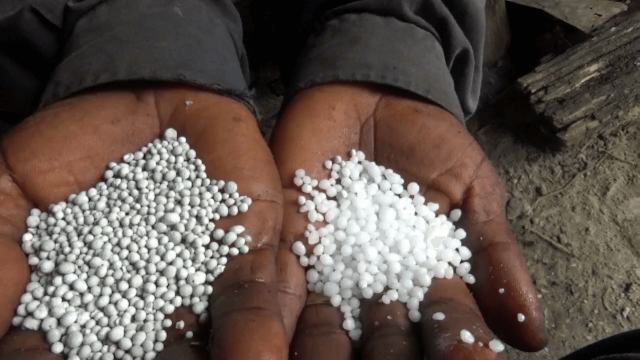
Fertilizer requirement for wheat is 100kg to 120 kg N/ha, 40 kg P O /ha and 40 kg K O/ha. For sandy loam and clayey loam, apply 6 bags per hectare of NPK 15-15-15 at sowing and 3 bags/ha of Urea at 4 - 6 weeks after sowing.
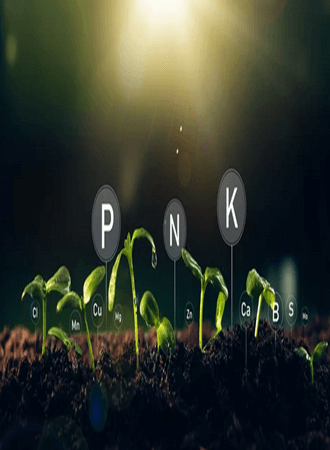
Timely application of fertilizers is very important as delayed application significantly affects grain yield and quality. The fertilizer should be thoroughly incorporated into the soil at sowing. The second application should be placed at appropriate depth for effective utilization by the crop.
WHEAT FARMING IRRIGATION
Wheat is largely grown in Nigeria under irrigation during the cool dry season. The crop can be grown under surface, sprinkler and micro-irrigation, but farmers in Nigeria commonly practice the surface irrigation methods.
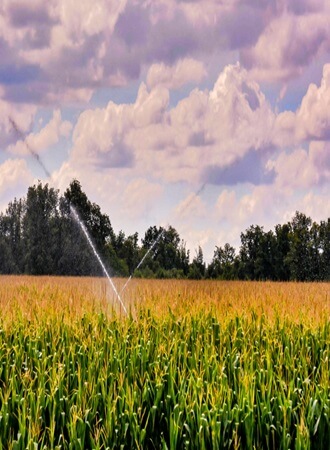
Surface irrigation methods are generally very wasteful in water use as most of the water is lost through evaporation, deep percolation, run-off and leakages of the conveyance system. The surface irrigation systems often use large quantities of water and thus water use efficiency is very low.
Furrow irrigation system is the most efficient in water use as it allows excess water to flow down the drain, creating adequate drainage in the root zone of wheat. The furrow irrigation method allows the wheat crop to be grown in ridges or beds while irrigation water is applied in furrows.
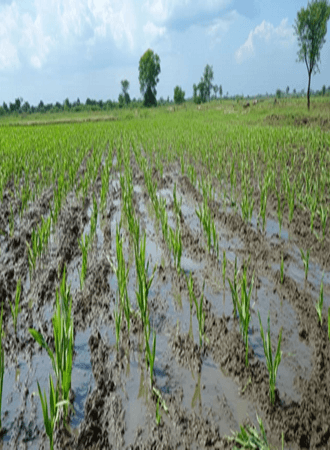
The new modified raised bed system is a furrow irrigation where wide beds are used to accommodate 3 - 6 rows of wheat separated by a furrow. This method saves about 20% water, reduce seed rate by 30% and increase crop yield by 20%.
Wheat Farming Water Requirement
Water requirement is the amount of water needed to meet the evapotranspiration needs of the crop and small amounts for building plant tissues. Based on the prevailing climatic conditions of the wheat growing zones in Nigeria during the wheat season, evaporation and transpiration are very high.
The wheat growing season is characterized by low humidity, high temperature and winds blowing at high speeds. These conditions accelerate loss of water through evaporation and transpiration. Water requirement of wheat is about 450 mm per season. The crop therefore does not require more than 45 mm depth of water per irrigation
WHEAT FARMING WEED CONTROL
Weeds generally compete with wheat for space, water, nutrient and solar radiation. Uncontrolled weeds cause loss of crop yield and quality, limit crop rotation and sequence, harbor pests and diseases, interfere with crop harvesting and increase cost of production.
Some weeds are poisonous and provide habitat for dangerous reptiles. If the land is properly prepared and the crop sown at optimum time, weeds do not constitute a problem on the growth of wheat during the dry season.
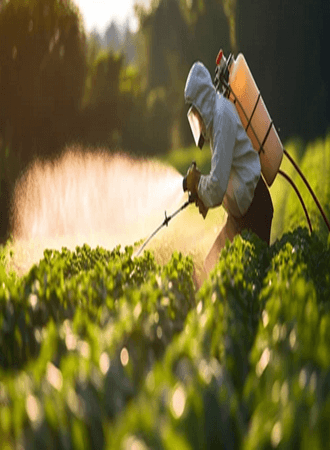
However, where weeds are a problem, they can be effectively controlled by hoe weeding/hand pulling at 3 weeks and 6 weeks after sowing. Weeds can also be controlled by the use of 2,4-D herbicide at a rate of 4 L/ha applied post-emergence to control broad leaves and sedges, and Stomp (Pendimethalin at 0.84 a.i kg/ha) pre-emergence herbicide to control grass seedlings
WHEAT FARMING MATURITY/HARVESTING
Timely harvesting ensures good grain quality and high market value. Harvesting too early will result in high percentage of unfilled or immature grains, which will lower the yield and cause high grain breakage during milling.
Harvesting too late will lead to excessive losses due to lodging and increased breakage. Wheat crop should be harvested as soon as the crop matures and the grains are dry and can be threshed easily. The recommended varieties mature in 90 - 120 days after sowing.
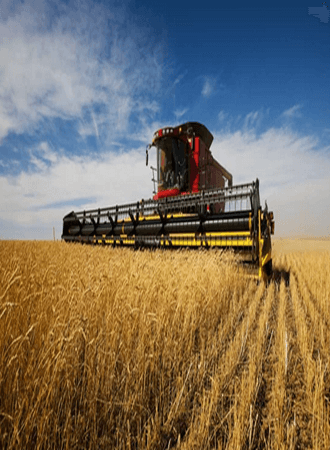
Smallholder farmers use sickle to cut the crop and tie them in sheaves for threshing. Medium and large scale farmers use reapers and combine harvester, which gives better quality grains, devoid of stone, as required by millers.
CONCLUSION
Research has shown that wheat production in Nigeria is economically viable and highly profitable to improve farmers' livelihood and create job opportunities. Wheat farming is a good venture for farmers and entrepreneurs looking to take advantage of the huge demand for wheat flour in Nigeria.
Would you like to start a profitable wheat farming business in Nigeria? You can get our wheat farming business plan today.
Our wheat farming business plan will give you detailed business planning, financial requirements and projections for starting a successful wheat farming business in Nigeria. For a payment of N50,000 you can get our wheat farming business plan today. You can click here to purchase our wheat farming business plan.
And if you want to make your payment offline, send an email to agsolutions@agricdemy.com or call/chat with us on +2348089864121
REFERENCES
Wheat Production and Food Security: Global Statistics and the Nigerian Situation – A Review by O. M. M. Nwadi and T. M. Okonkwo
TAAT (Technologies for African Agricultural Transformation) Wheat Brochure






Share This Article: