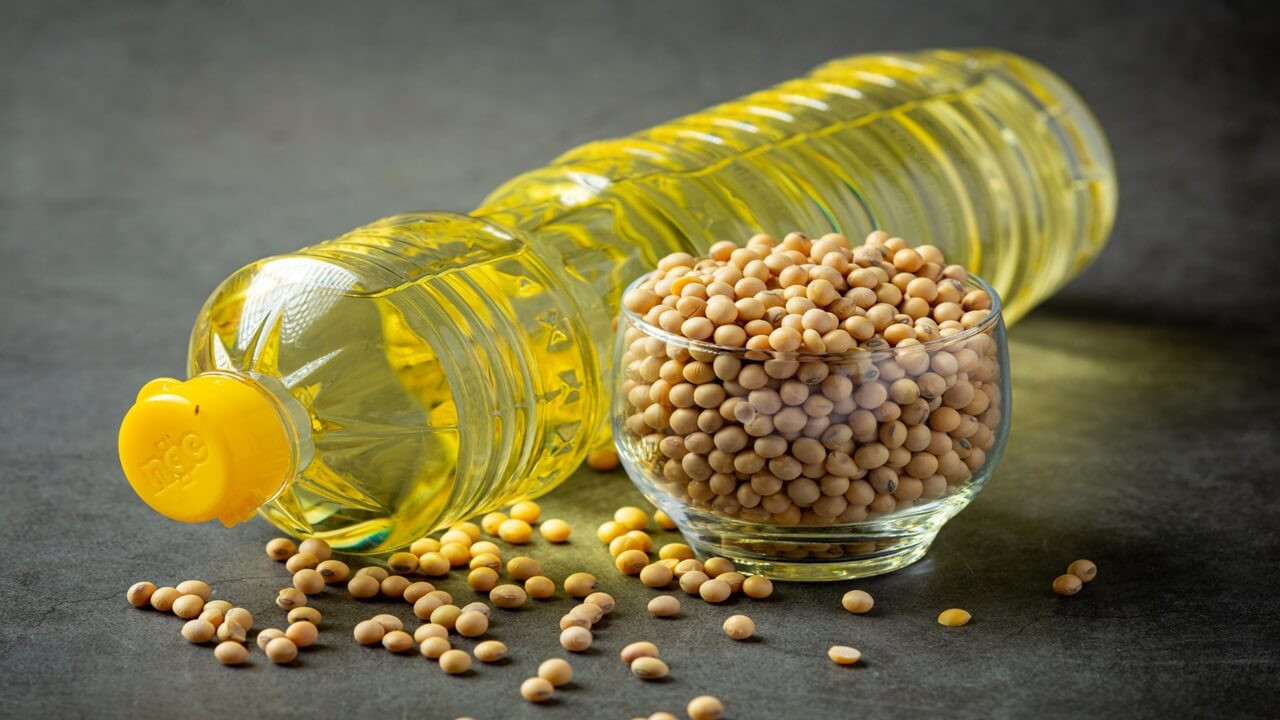
Soybean Oil: Production, Consumption and Health Issues
June 25, 2026, 4:07 pm
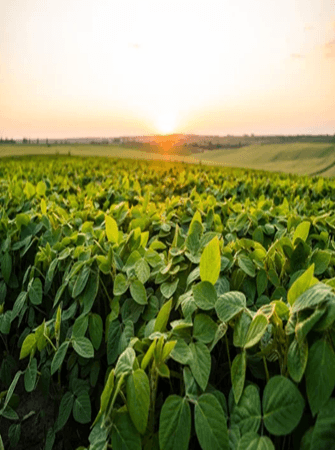
Soybean has been grown as a commercial crop primarily in temperate ecologies for thousands of years, first in northern Asia and in more recent years in North America and countries of the Southern Cone of Latin America.
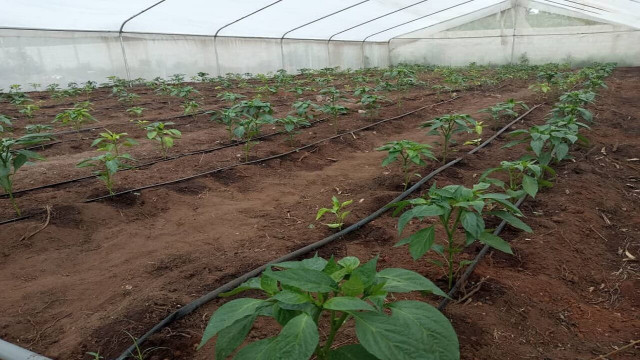
The remarkable success of this crop in temperate zones is well known to all, but there is also a very important potential role for soybean in many cropping systems of the tropics and subtropics, where often the farms are mostly small and with little mechanization. Smallholder participation in development is a major factor in regard to soybean expansion and utilization as it contributes to sustainable development and meeting goals of the World Food Summit.
The driving forces for growth of such smallholder based soybean production include potential increases in farm family income to help lift them out of poverty, and also - in relation to sustainability - the need for an easy-to-grow, leguminous, rotation crop for the millions of hectares in cereal and root crop production. Farmers need to rotate crops to break disease and pest cycles and to maintain soil fertility, and the rotation crops need to be profitable.
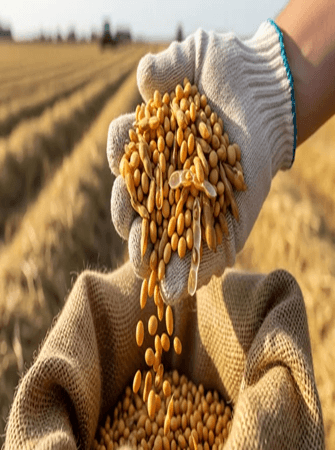
There are, in some cases, other options for rotation crops, but soybean can be a good choice especially when other legumes are subject to heavy insect and disease pressures and where there is a clear market link from the grower to the industry. Soybean is one of the few choices where major expansion in production area might be possible because of the crop’s demand in the vegetable oil and feed sub-sectors, while in contrast the market for other legumes with food-only uses (e.g. cowpea, Phaseolus beans, lentils, pigeon peas, etc) becomes rather quickly saturated when the area of cereal crop rotation reaches even 10% of total cereal crop lands.
Soybean Oil Consumption Patterns
While soybean oil is produced in a limited number of countries only, it is widely traded and thus available in almost every country of the world. At the global level, annual per capita consumption is estimated at 3.2 kg. However, when disaggregated, consumption levels differ widely, with average consumption levels in industrialized countries almost three times that observed in developing nations.
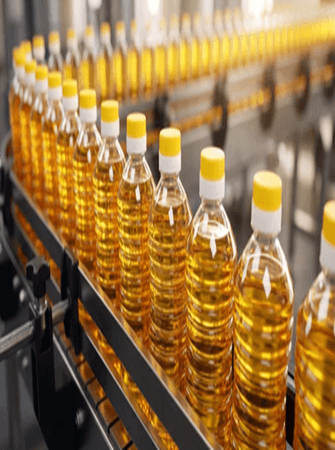
Also the share of soybean oil in total vegetable oil consumption or total oils & fats intake varies considerably between regions and countries, depending on numerous factors such as the availability of locally produced oils, consumer habits and preferences, local and international market prices and national trade policies.
Overall, during the last two decades, two oils, soybean oil and palm oil, have strengthened their position vis-à-vis all other oils and fats, with palm oil recording the fastest growth rates. These two oils are close substitutes and both products are widely traded - at comparable price levels - on the global market.
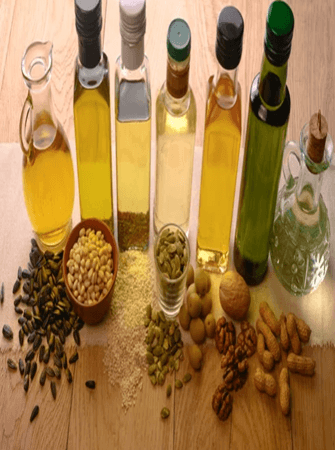
Regarding vegetables oils & fats in general, available statistics indicate that consumption tends to increase faster in poor countries than in middle- and high-income countries, and some national studies seem to confirm that extra income enhances fat intake of the poor more than that of the rich.
Consequently, in the long term (i.e. by the year 2030), it’s anticipated that oil crop products will account for as much as 45 out of every 100 extra kcal added to average diets in developing countries, which implies a continuation and intensification of the recent trend. Relatively high income elasticities of demand explain why there is considerable scope for increasing average per caput consumption of vegetable oils in developing countries. Soybean oil, together with palm oil, is certainly well placed to play a central role in this expansion.
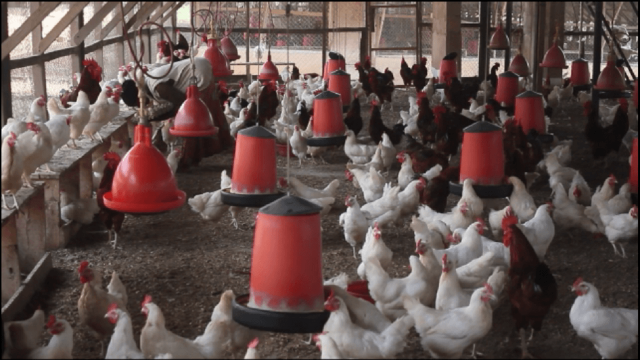
Also soybean meal is widely consumed and has penetrated markets in most regions - thanks to the expansion of intensive livestock production methods that are based on the use of high protein compound feed not only in developed countries but also in parts of the developing world, e.g. broiler production in Asia.
Although close to 60% of global utilization occurs in developed countries, annual growth in consumption in developing countries by far exceeds the expansion recorded in developed countries, mainly reflecting changes in consumer habits triggered by income growth. However, it needs to be emphasized that in the diet of low-income and chronically food insecure populations meat consumption generally occupies a secondary role as most of the protein consumed tends to come from vegetable origin.
Soybean Nutrition and Related Health Issues
The role of soybean products in overall food consumption has been outlined briefly above. In what follows, the nutritional value and health benefits associated with the consumption of soybean foods on one hand and soybean oil on the other shall be discussed.
Soybean Foods
The consumption of soy-based foods derived from the whole fresh bean has a long tradition in numerous Far Eastern countries (Taiwan and other parts of China, Japan, Indonesia, DPRep. of Korea, Rep. of Korea, India, Thailand, Vietnam) as well as in specific pockets of Africa (notably Nigeria and Uganda).

Traditional soybean foods - such as miso, tofu, tempeh, soya sauce etc. - are derived either directly from the whole fresh bean or after processing of the bean into soymilk and are consumed either in fermented or non-fermented form. In the recent past, the range of soybean foods has expanded to include
- fresh beans and sprouts
- dairy substitutes such as soy milk, cheese etc.
- grain products such as soybean bread, pasta and flour
- meat substitutes
- soy spreads and pastes.
Although, in recent years, soybean foods have been introduced in many more countries in the developed and developing world, the share of domestic soybean supplies intended for direct consumption - as opposed to crushing - remains below 10% at the global level, an average figure that masks strong differences between main geographical regions.
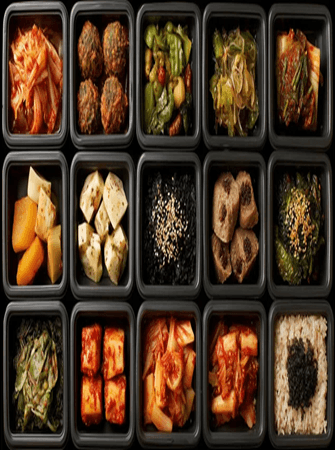
Soy-foods are generally considered to be nutritious and healthy based on their nutrient composition which includes protein, fat, carbohydrates, dietary fibres as well as minerals and phytoestrogenes (or isoflavones). With regard to the latter, recent scientific studies associate the consumption of phytoestrogen-rich diets – e.g. Asian diets rich in soya beans - with a lower risk of the so-called “western” diseases, i.e. coronary heart diseases, osteoporosis, hormone-dependent forms of cancer and menopausal symptoms.
The health-benefits of isoflavones contained in soyfoods have been explained by their structural resemblance to endogenous oestrogen, showing oestrogenic and anti-oestrogenic properties as well as anti-oxidative, anti-proliferative and anti-angiogenic properties which are non-hormonally dependent.
Based on the above and considering the economic and technical limitations prevailing in tropical developing countries, the direct consumption of soybeans as a nutritious food that is economically accessible for large parts of the population appears to be appealing. However, the observed slow spreading of soy-foods outside the prevailing traditional areas of consumption seems to suggest that a relatively low level of consumer acceptability of these products is likely to stand in the way of a significant expansion in consumption.
Soybean Oil Consumption and Health Issues
Soybean oil is the most widely consumed vegetable oil worldwide. Although it is used as cooking oil in private households its main use is that of key fat ingredient in industrial food manufacturing, where, closely followed by palm oil, it represents the most commonly used fat. The role of oils & fats in general and soybean oil in particular in human nutrition and specific health aspects associated with their presence in the diet deserves particular attention.
Of particular interest is their potential contribution to the prevention of diseases. In general, the incidence of chronic, non-communicable diseases (NCDs) is growing rapidly. In developing countries, these diseases exist alongside hunger and undernutrition and are becoming increasingly important. One major determinant of this growing health burden is the so-called ‘nutrition transition’ observed in many developing countries, that is rapid socio-economic, demographic and technological changes in society that induce a shift in habitual dietary consumption.
Nutrition transition does affect vegetable oil consumption in developing countries, in that urban as well as rural populations seem to be undergoing a gradual shift away from traditional, locally produced oils and fats towards other, readily available and attractively priced vegetable oils, notably imported soy oil and palm oil, that are consumed either directly or as ingredients in commercial food products.
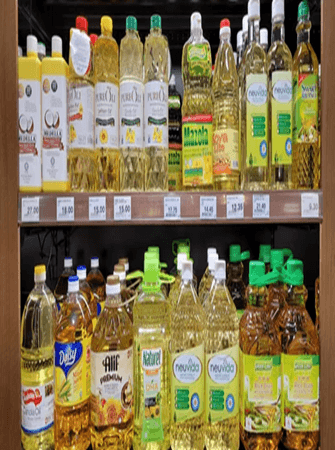
In this context, an evaluation of consumption trends against broad population nutrient intake goals appears to be of interest. With regard to ranges proposed for the total intake of oils/fats preliminary statistical analyses conducted by FAO (Food and Agriculture Organization) suggest that, on average, total fats intake is within recommended ranges in developing countries but has exceeded the upper limits in developed countries.
The steady and strong expansion of global soybean oil and palm oil consumption has played and is likely to continue playing an important role in this regard. A number of developing countries, notably in Sub-Saharan Africa and South Asia, are expected to remain below the recommended lower limits; notwithstanding, a growing number of developing nations are anticipated to reach and then exceed the recommended upper limits.
Many mid-income developing countries and most developed nations will rapidly exceed the recommended upper consumption limits, often by a considerable margin, leading to malnutrition and potentially raising the exposure of populations to health risks, for example regarding obesity. The observed rise in soy and palm oil consumption may thus be associated with benefits as well as disadvantages and risks depending on the country and population group concerned.

Reportedly, diets with potentially negative health implications are those where saturated fatty acids and/or trans fatty acids are in excess of certain desirable levels, while diets including oils/fats rich in mono or poly-unsaturated fatty acids tend to be considered as healthier. In individual countries and population groups, diets include different proportions of these fatty acids depending on the oils and fats consumed.

A meaningful evaluation of consumption trends by population groups or countries requires detailed information on the pattern of oils/fats consumption, based on representative individual and household consumption surveys in both urban and rural environments. At the present time, such information is not available, and thus no general conclusions can be drawn.
It is important to recognize, in many developing countries, the coexistence of conditions which predispose them to the “double burden” of undernutrition on the one side and partly diet-related NCDs on the other - a circumstance that further complicates the assessment of the role of an individual foodstuff like soy oil in the food security context. While soybean oil can be expected to maintain and further strengthen its position in global consumption of oils and fats, nutritional considerations are likely to play an increasing role in the future.
In the longer term, dietary recommendations relating to the intake of oils and fats could modify consumption behaviour, initially in developed countries but gradually also in developing countries. In turn, crop production patterns, trade as well as food processing, distribution and marketing could be affected. At the same time, any dietary adjustment process will take place in the presence of other changes, notably the ongoing liberalization of trade, globalization of food production, processing and distribution, urbanisation, technological progress etc.
The entire prospect is raising considerable concern in the global oil/fats industry - a highly specialized and competitive sector that, due to high costs associated with changes in the production chain, is particularly susceptible to changing market conditions. The industry is expected to increase efforts to adjust to possible health related shifts in demand. For instance, investments into technologies that allow altering the fatty acid composition of individual vegetable oils via genetic modification of the underlying crop can be expected to rise.
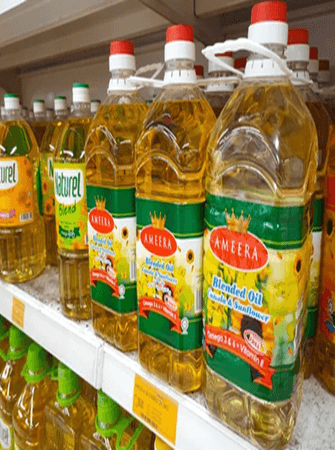
Also, the manufacture of vegetable oil blends that combine the nutritional characteristics of individual oils in an optimal manner is likely to become increasingly important as is research on the beneficial health properties of nutrients contained in specific vegetable oils and oil crops. Over the next few years, attention could focus in particular on oil crops other than soybeans, notably oil palm and coconut, possibly leading to changes in their competitive position vis-à-vis other oils.






Share This Article: