Fish Pond Construction Procedures
August 12, 2026, 8:38 am
Fish Pond Construction Procedures
To construct a good fish pond for aquaculture or fish farming, these procedures must be followed:
- As soon as a suitable site has been located, surveys (visual and detailed) are usually done
- Develop a topographic map of the construction site
- Develop a detailed plan and design specification needed to guide construction work
- Clearing of the fish farm site of vegetation
- Strip topsoil to clay layer and stockpile for finishing dykes
- Put profiles (pegging)
- Build dyke
- Build monk and channel
- Smoothen excavated pond area
- Grassing (temporary and permanent protection against erosion)
Excavation of The Fish Pond
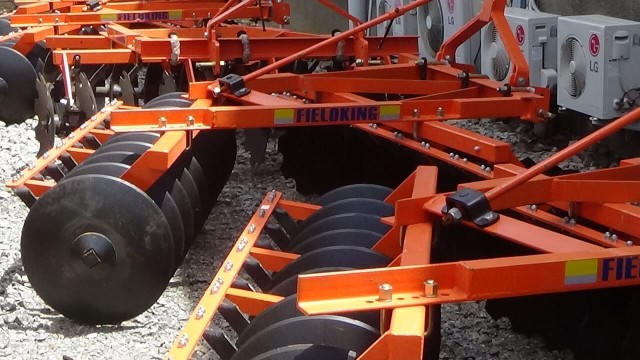
The use of heavy equipment in fish pond construction in place of human labour is becoming increasingly popular in most cases, indispensable especially in areas where heavy equipment can penetrate. Excavator is used for excavating pond following the put up profile dimensions.

Laying Out The Fish Pond Bottom
After excavation of the pond, the fish pond bottom is redressed manually to smoothen fish pond area and the bottom in particular. The fish pond bottom assumes a shape to ease water drainage by gravity through water control structure (monk).

Fish pond bottom needs to be levelled for uniform growth of natural food and for efficient water management. Mechanical levelling is a cheaper and faster means of levelling a pond bottom than manual levelling.
Construction of the Draining Installation Monk/Sluice Gate
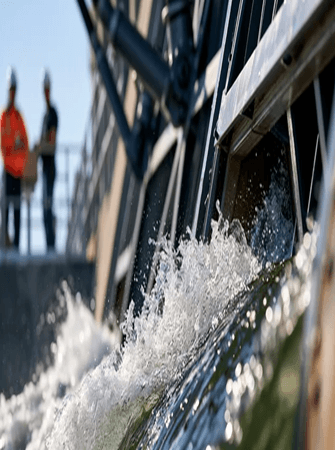
A combination of pipe and gate is called a monk. Sluice gate is often used in place of a monk for slow running water supply source. These draining structures are placed at the deepest point of the fish pond bottom. The monk is vertically erected in water while the sluice gate cuts across the dam with iron boards.
The basic consideration to be noted in constructing a concrete gate are:
- Adequate foundation
- Adequate reinforcement against site pressure
- Proper cement mixture and curing
- Prevention of pipping and undercutting of water
Measurement of Fish Pond Physio-Chemical Properties
Fish pond management involves the maintenance of pond structure and water quality. Water being the medium where all biological activities take place (i.e. respiration, reproduction, movement, growth, feeding and response to stimuli by fish).
Water quality is one of the most significant factors to be considered for fish culture. Water quality refers to all physical, chemical and biological parameters that influence the beneficial use of water in optimum performance of a particular fish species in aquaculture.

Physical water parameters include: temperature, colour, odour, turbidity or transparency, water current, water waves etc.
Procedure for Measuring Fish Pond Physio-chemical Water Parameters
Physical Factors
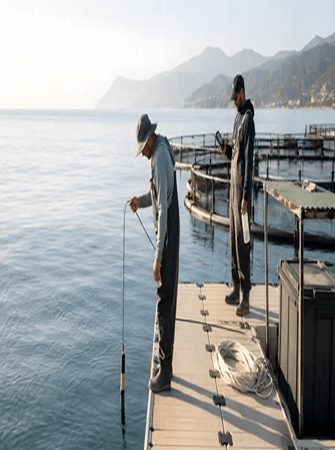
Surface Temperature: with the aid of a thermometer, surface temperature of a water body is known.
Procedure: Lower the mercury bulb thermometer into the water surface and allow to stand for 5 minutes, take the reading while the thermometer bulb is in the water. Repeat this at two or more spots in the pond and find the average surface temperature of the water body.
Water Current
Procedure: Measure a definite distance along the shore of the water body say 50m and peg this at X and Y. Note the direction of the current. With the aid of cork and a stop watch, note the time the cork will float the distance X—Y.
The current is therefore the distance X—Y ÷ Time (seconds)
Chemical Factors
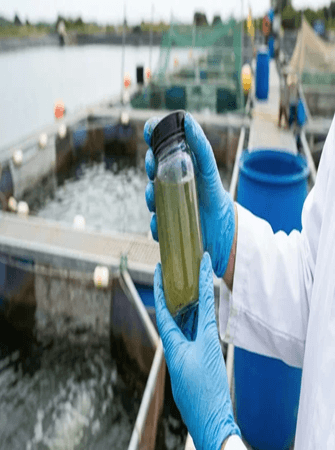
pH Measurement: Colorimetric method
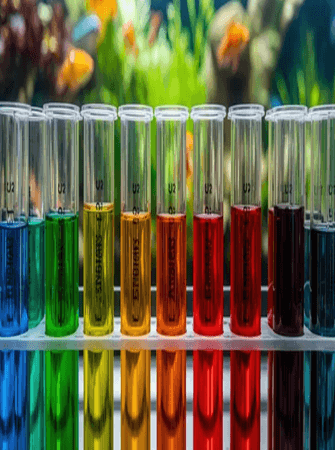
Procedure: Collect some water from the pond with test tubes in Lovibond comparator. Add 10 drops of bromothymol blue into one of the test tubes, shake and insert into the comparator. Move the comparator disc until a colour in the disc coincides/merges with the colour of the treated water. Note the pH by reading the inscribed numbers (whole or decimal numbers)
Measurement of Dissolved Oxygen
With the aid of a dissolved oxygen bottle, collect water by lowering the bottle gradually in the water until the bottle is filled without bubbles and cover the stopper.
With the aid of a dropper, add 2ml of each managanous sulphate and alkaline acid (i.e. reagents I and II). Cover the bottle and shake, allow to settle. When you notice a clear solution above a brownish precipitate add reagent III (concentrated sulphuric acid), the precipitate dissolves and disappears. Measure out 50ml of the solution and titrate with standardized 0.025N sodium thiosulphate solution. Carry out 2 to 3 titrations and find out the average.
Calculation
Since 1ml of 0.25N Na2S2O3 is equivalent to 0.2mg of O2, the number of ml of Na2S2O3 used will be multiplied by 4 to obtain the dissolved oxygen content of the water
Effects and Importance of Fish Pond Physio-Chemical Factors
Water is regarded as a medium where all bio-activities of the fish occur. Changes would definitely occur in the quality of the water due to the interaction between the water, the fish, the soil and other aquatic fauna and floral. The selected physio-chemical factor to be considered are:
Temperature
This refers to the degree of hotness or coldness of an environment. It is an erratic agent of weather, hence not easily manipulated by fish farmers. Every fish species has a temperature range within which it can grow at its potential rate. The desirable temperature for cultivation ranges between 22°C to 35°C for tropical species.
Conversely, the temperature stress caused by temperature and contributing effect of oxygen in fish include suffocation, loss of appetite and heavy slow movement. As water temperature increases, the solubility of oxygen decreases.
pH
The pH of hydrogen ion refers to the acidity and alkalinity of water. Although, water pH is the result of interaction of numerous soluble substances and biological phenomenon, yet it is, often dependent on the substratum (soil type). Water pH can be influenced by liming (CaCO3), in case of acid water.
Water pH values ranging from 6.5—9.0 at day break are most suitable for fish production. pH is measured on a scale of 1—14, water sample with pH>7 is termed alkaline. When it is higher than optimum, deterioration of gill tissues result.
Dissolved Oxygen
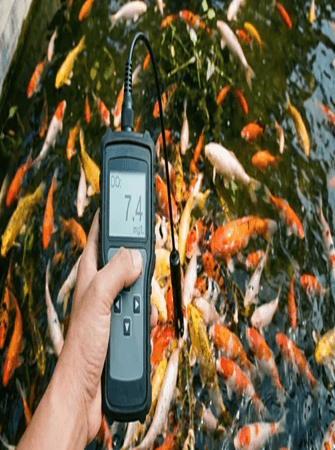
Food is arguably second to air in living things. The dissolved oxygen content of the water is regarded as the most critical factor in fish culture. Oxygen is a gas present in air, but fish breathes oxygen in water through its gills as dissolved oxygen (oxygen in solution) and gives out carbon-dioxide.
Low dissolved oxygen levels affect fish adversely. If mortality does not result immediately, fish will be more susceptible to parasites and disease infection. Also, prolonged low dissolved oxygen level leads to poor feeding and growth. Oxygen consumption of fish increases with food intake as fish uses oxygen to oxidize ingested food to produce energy.
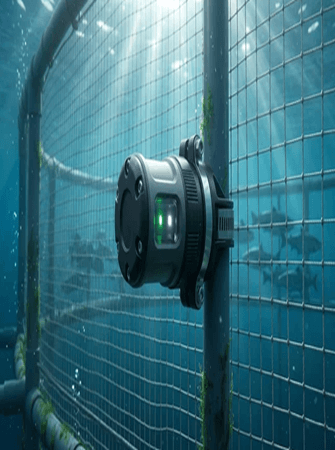
Fish requires adequate concentration of dissolved oxygen for survival and growth. Concentration of dissolved oxygen above 4mg/liter are desirable for fish health, growth, survival and bio-activities. Low dissolved oxygen is a common occurrence in poorly managed ponds.
Low dissolved oxygen can arise due to any of the following reasons:
- Algae bloom
- Over-feeding (organic decomposition)
- Water stagnation
- Overstocking
- High water temperature
- Source of water (well, borehole, swamp etc)
- Carbon-dioxide (CO2)
Carbon dioxide occurrence in fish culture is associated with the respiration of aquatic animals and decomposition of organic substances. Fish is very sensitive to small difference in the concentration and apparently attempt to avoid areas with high carbon-dioxide levels. Carbon-dioxide that is less than 5mg/liter is considered good for fish growth.
If you need help constructing your fish pond, send an email to agsolutions@agricdemy.com or call/chat with us +2348089864121



Share This Article: