Fish Pond Management
August 12, 2026, 8:14 am
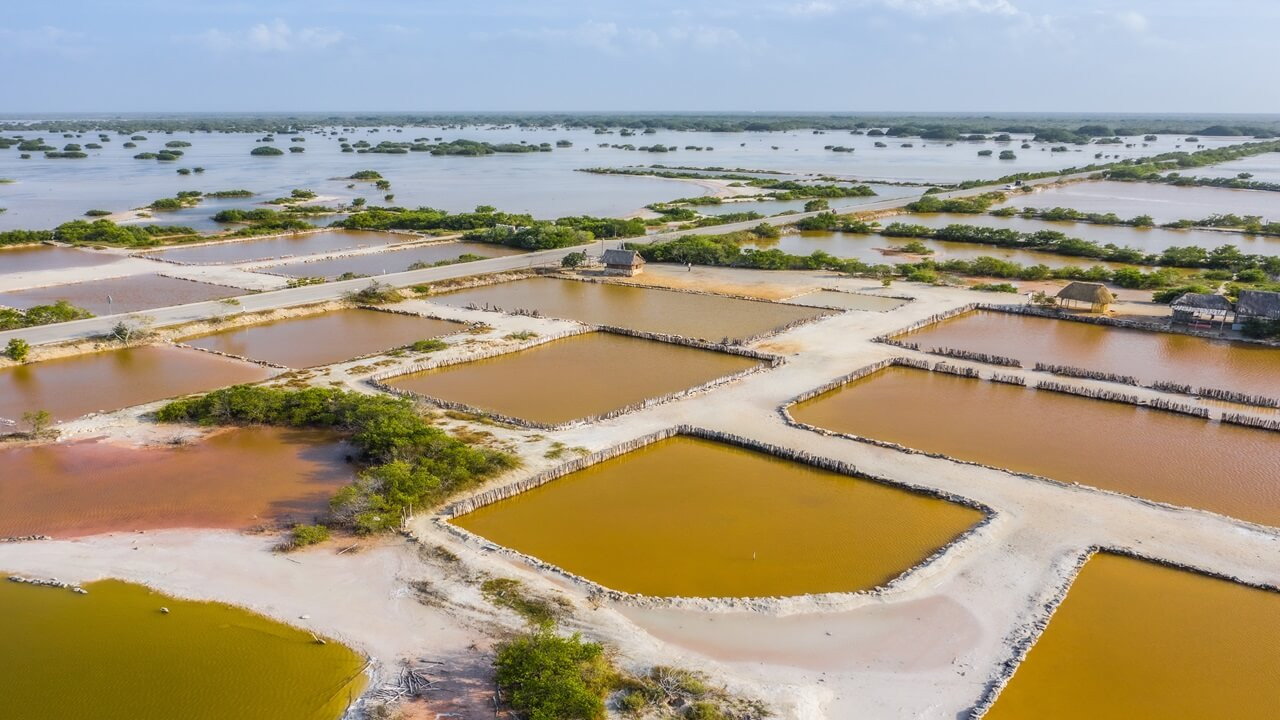
A fish pond may be defined as a shallow standing body of water designed primarily for aquaculture and constructed in such a way that it can easily and completely drained by gravity.
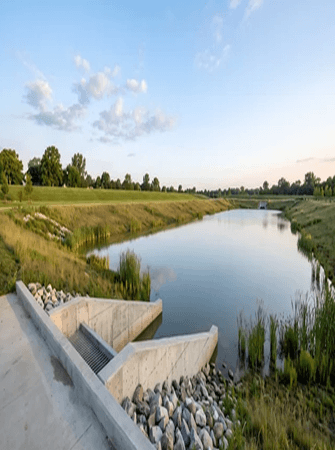
A typical fish pond is identified with the following structural features:
- 3-Embankment
- 1-Dyke
- Inlet
- Outlet
- Core Trench (subject to pond size)
- Water Control Monk Boards
Classification of Fish Ponds
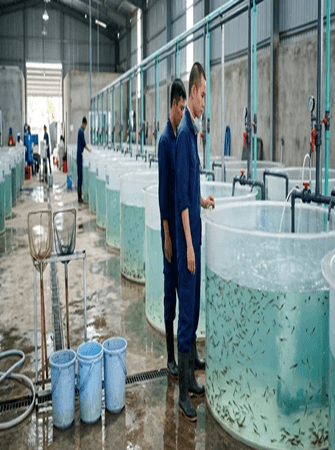
Fish ponds are classified according to the volume of water supply or size, the species of fish stocked, the usage and source of water supply.
Volume of Water Supply
Fish ponds that fall under this category include reservoirs, dams and lakes purposely constructed either for portable water supply or for generation of electricity as in the cases of Ago-Are and New-Bussa respectively. They are usually big depending in the purpose and may be of dual purposes e.g. Kainji Lake
Species of Fish Stocked
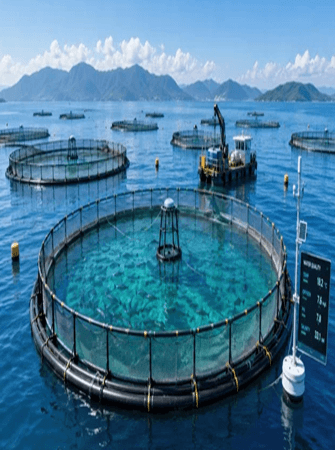
Fish ponds are named after generic name of fishes stocked e.g. catfish pond, tilapia pond, carp pond etc.
Usage
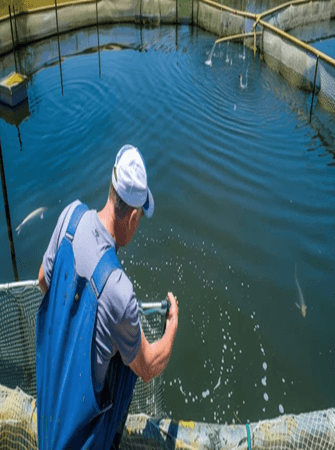
Fish pond aquaculture systems are used for many farming activities and are therefore named after their utilities e.g. nursery pond, breeding pond, production pond etc.
Source of Water Supply
Water gets into the fish pond aquculture system by different ways and are therefore named on this basis e.g. sky pond, spring pond, divergent pond, rostary pond and barrage pond.
Fish Pond Management
Fish pond neutralization and fertilization are some of the management strategies aimed at getting the highest possible yields from aquaculture.
Fish Pond Neutralization
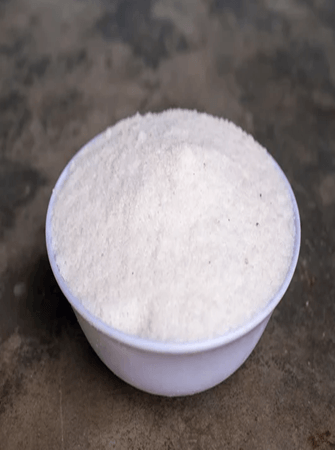
Liming is used to keep the fish pond bottom from getting too acidic. It helps to release valuable fertilizing materials (organic matter) in the mud, it improves the buffering nature of water as it can also be used to control water hardness.
Liming is a cheap way to clean fish ponds. It increases phytoplankton growth. Lime is obtained as agricultural lime which is not very soluble. The amount of lime depends on the acidity or alkalinity of the soil and whether the water is soft or hard.
Soft waters have little lime and salts dissolved in them, but hard waters have larger quantities of lime and salts. Hard waters are best for fish culture.
More lime is needed on acidic or heavy clay soils and soft waters than on sandy or neutral soil and hard waters. A new pond of pH 6—7 requires about 1,000kg/hectare and in older ponds, between 300—800 kg/ha is required. It is important to ensure that liming is done before fertilization of fish ponds. It is preferable to lime the pond during the rainy season when low pH may be encountered. The degree of success depends on how well the lime is incorporated with soil.
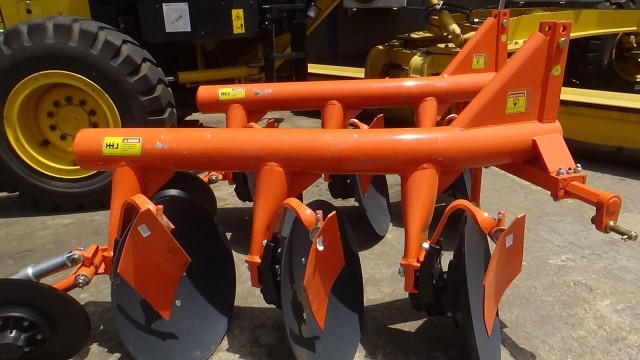
Broadcasting on the surface of the fish pond bottom and raking or harrowing it into the bottom soil has been found very effective.
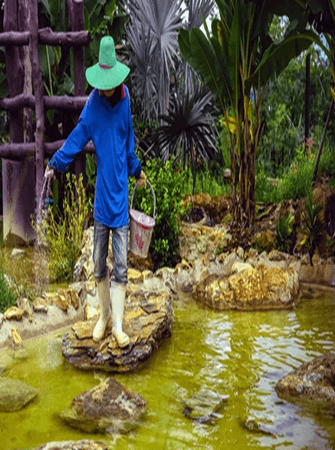
As a result of scarcity of agricultural lime (CaOH)2 or slaked lime (CaCO3), alternative source of liming material, wood ash, is now being utilized in fish ponds in Nigeria. 100gm and 150gm of wood ash produced a pH of 8.5 and 9.1 respectively when applied to 500ml of pond water with ferric intrusion of pH 5.3
Importance of Fish Pond Liming
The importance of fish pond liming can be summarized as follows:
- Increasing the pH of water and this ensures the availability of nutrient like nitrate and phosphate
- Increasing alkalinity of water hence increasing carbon dioxide for photosynthesis
- Providing a buffering capacity to pond water against pH fluctuation
- Clearing humic stains of vegetative origin which retard light penetration into the fish pond water
- Destroying bacteria, fish parasites and the predators in the fish pond
- Controlling water hardness
Rate of Fish Pond Lime Application
The rate of lime application varies depending on the purpose, time of application, type of lime used, method of application and year of pond construction (age of the pond). For the two common types of lime, their application rate are:
Quick lime and slake lime: 200—500kg/ha
Agriculture lime: 1000—5000 kg/ha
Types of Fish Pond Lime
- Quick Lime (CaO)
- Slake Lime (Ca(OH)2)
- Agriculture Lime (CaCO3)
Method of Fish Pond Lime Application
Lime material should be finely ground and broadcast or spread over the entire pond bottom. Lime can also be applied when there is fish in the pond. This is strictly for water quality control.
After liming the pond bottom, it should be left dry for 1 to 3 weeks in case of quick lime (CaO) and 1 to 2 weeks in case of others e.g. slake lime (CaCOH)2 and agriculture lime (CaCO3) to allow proper mixing of lime with soil.
Fish Pond Fertilization
Fertilization is the process aimed at improving yield. Fertilizer contains one or more chemical plant food element which can be used by plants to promote normal growth for development and reproduction. Fertilizers are used to improve on natural foods available to fish.
Fertilized ponds produce more fish per hectare than unfertilized ones. Even though some waters may contain adequate nutrients (N.P.K), it is still necessary in fish culture to add fertilizers from time to time in order to maintain this level throughout the culturing period.

Fertilizers stimulate pond productivity and this in turn stimulates higher growth rate of fish. The best fertilizer is one which contains a lot of phosphates e.g. basic slag, powdered single super-phosphate or granular double super-phosphate which is more economical. Manure are very useful in addition to fertilizer. Pig, poultry or cow dung may be used.
Fertilizer as a rule, are applied 2 or 3 weeks after liming and when the pond has been impounded. This is to prevent the phosphorous from reacting with lime or being lost to the mud if the pond is dried. Manuring or fertilization should be carried out during the early hours of the day.
Experiment with a new fertilizer before adopting its uses in your ponds. Using of organic fertilizers with broadcasting method sometimes may results in water quality problems.
The safest methods of application of organic fertilizers are:
- Make a crib with bamboo stakes at one corner of your pond and dump the manure. Replenish the compost from time to time
- Fill a jute bag with cow or poultry dungs and hang at various points in the water

In case of inorganic fertilizer the following method of application can be employed:
- Build platform under the water and place heaps of fertilizer on it
- Dissolve fertilizer in plastic buckets and sprinkle over the entire pond surface
Fill a jute bag with inorganic fertilizer and submerge it under the water
Fish Pond Maintenance Guidelines
Routine Management of fish pond fish farmers must perform include the following activities:
- Check dams, dykes or pond walls for damage. Repair cracks or holes as well as slopes
- Inspect and remove any blocking or clogging of inlet and outlet pipes and screens
- Check furrows for any rubbish, wood or stones that inhibit water flow
- Check for any sign of piscivirous birds, otter and take measures to prevent such
- Ensure a good maintenance of plants/grass on pond walls
- Monitor the consumption of food by fish to avoid organic pollution
- Ensure that the correct water level is maintained
- After draining of pond during cropping, level pond bottom
- Monitor water colour and fertilize when necessary
If you need help building and managing your fish pond, send an email to agsolutions@agricdemy.com or call/chat with us +2348089864121





Share This Article: