Aquaculture: Types, Importance and Site Selection
August 12, 2026, 9:45 am
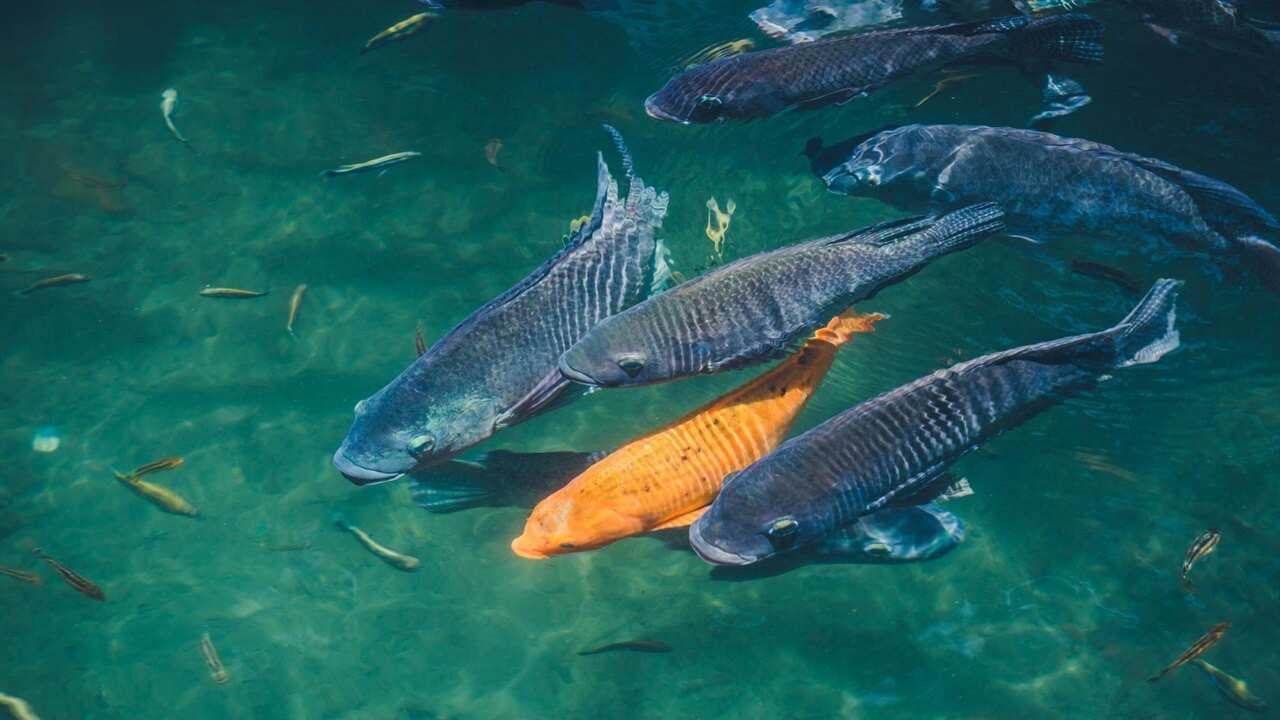
Aquaculture is the controlled growing of finfish, crustaceans and molluscs in confined water.
What is Aquaculture
Aquaculture is the manipulation of water bodies to achieve desired result in growing of fish and crustaceans to marketable sizes and brood stocks for spawning purposes.
Aquaculture is another form of agriculture comparable to intensive livestock farming in which fish culturist can manipulate the water and the fishes to maximize fish production.
Importance of Aquaculture
Aquaculture offers a number of opportunities such as:
- Poverty alleviation
- Generation of employment
- Community development
- Reduction of over-exploitation of natural aquatic living resources
- Food security in tropical and sub-tropical regions
- Provision of fingerlings for restocking our depleted natural bodies of water and for research purposes
- Making regular supplies of fingerlings possible
- The introduction of several important species of fishes at widely separated geographical areas
- The development of strains superior to their ancestors by methods of selection and hybridization
Types of Aquaculture
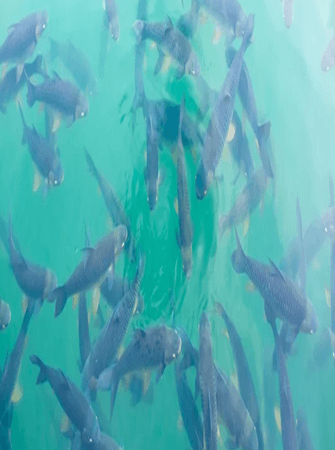
Aquaculture could be broadly divided into two types:
- Extensive aquaculture
- Intensive aquaculture
Extensive Aquaculture
Aquaculture in natural waters is usually extensive while it is intensive in artificial waters.
In extensive fish culture, fish are held in a situation where majority of the food available are natural food. In intensive fish culture, fish are maintained in units in such high densities that little natural food is available and supplementary food must be supplied to the fish if the desired fish growth is to be achieved.
In natural bodies of water, the complete control over the biological, physical and chemical factors which influence aquaculture directly or indirectly can seldom be achieved. In artificial waters, these factors which include water level, harvesting of fish, pollutions, weed control, undesirable fish species etc. can be kept under control in order to improve productivity of the fish pond
Intensive Aquaculture
Intensive aquaculture includes the following:
- Monoculture: this involves stocking one species of fish
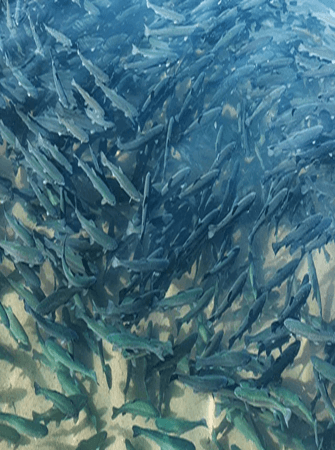
- Monosex Culture: this involves stocking one sex of one species of fish e.g. Tilapia males only
- Poly Culture: This involves stocking fish of different species, ages and sizes
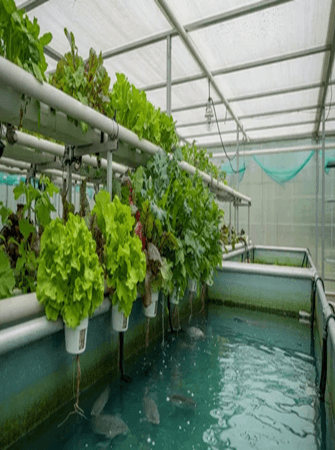
- Mixed Farming: This involve stocking fish with other crops e.g. in rice paddies, or together with ducks, or vegetable production
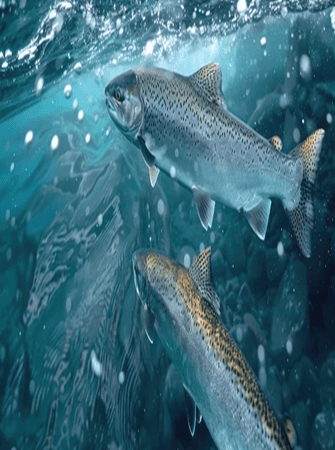
- Fish Ranching: This is a two stage method of fish culture practicing both intensive and extensive forms of fish culture. This technique makes use of the migratory behavior of the anadromous species (i.e. species that migrate from marine to freshwaters). These species e.g. salmonid fishes, largely return to the river in which they were born. This fish are artificially bred and acclimatized in salt water and released into the sea where they then feed naturally for a period of one to four years. As a result of their homing instinct, they return to the river from where released and at that point, they are recaptured. This method is practiced commercially in the West Coast of America
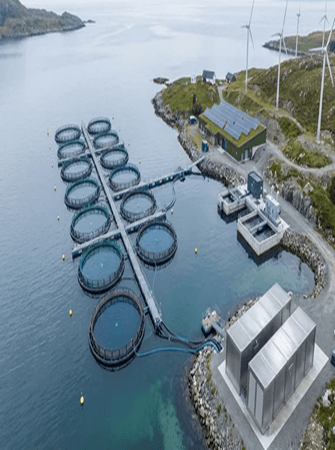
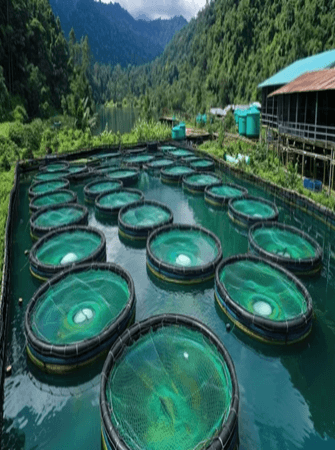
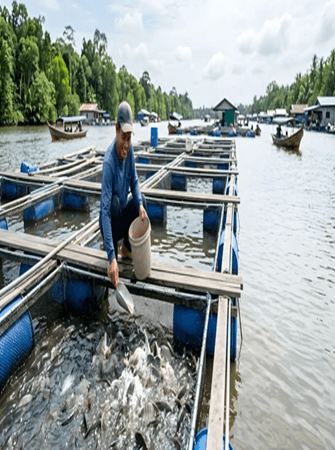
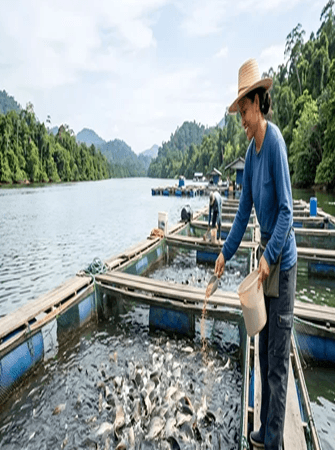
- Cage Culture: Involves holding fish in floating method cages in water bodies with water exchange occurring across the nets
Semi-intensive Fish Culture: Involves feeding fish partially with supplemental feed and most often on natural feed sources
Risks in Aquaculture
Some of the risks involved in aquaculture include:
- Biological Risks
These include the following:
- Parasites and diseases e.g. bacteria, virus, fungi, protozoa
- Predators e.g. otters, piscivourous (fish-eating) birds such as kingfisher, fish eagles and herons, carnivorous aquatic animals, insects , frogs, toads and man
- Algal blooms or aquatic weeds
- Management of natural production of fish food (over-fertilization)
- Physical Factors
These include the following:
- Water quality parameters e.g. dissolved oxygen, pH, temperature, turbidity (dissolved materials in water which affect light penetration)
- Floods and storms which cause erosion, silting, clogging of the inlet and outlet pipes
- Edaphic factors: soil-controlled factors e.g. porosity or water-retention ability
- Social and Economic Factors
These include:
- Poaching—stealing of fish
- High cost of feed production and unavailability of fish feed
- Problem of securing fish fingerling
Site Selection for Aquaculture
Selection of a suitable site for an aquaculture venture determines facility and construction cost and strongly influences the ultimate success of the resulting aquaculture enterprise. A number of factors must be considered when selecting a site for pond construction:
- Ecological Factors
- Topography
- Hydrological and Meteorological information
- Quality and quantity of water
- Soil suitability
- Biological Factors
- Species selection
- Predator control
- Economic and Social Factors
- Type of facility
- Marketing
- Safety and security
- Political and Legal Matters
Aquaculture Ecological Factors
Topography
When selecting a site for aquaculture, preference should be given to locations where gravity flow may be used to fill ponds. Though, water can be supplied by pumping, gravity flow will be more economical. It is also advantageous to drain ponds by gravity flow. To take advantage of gravity flow, the pond bottom should be at a higher elevation than the water table where the pond is drained.

Hydrological and Meteorological Information
Hydrological analysis should be conducted for the water source and immediate surrounding. Flow records must be examined if the water source is to be a river, stream or spring. Data must be obtained on water stage elevations, and flow rates at the anticipated point of removal for filling ponds and for water replacement due to seepage and evaporation.
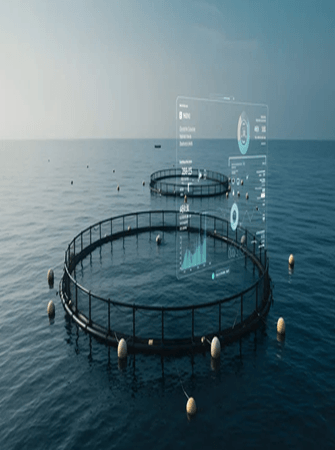
If the source is to be a lake or reservoir, data must be obtained on water inflows and outflows. Documentation of existing water uses and how they will affect the aquaculture operation should be produced. If a reservoir is to be used as the water source, a minimum catchment area to pond area ratio of 11:1 or 15:1 should be used.
Availability of good water quality is important for all fish farming system but water quality is of even greater importance for land-based fish farming systems. A constant water supply is needed, not only to fill the pond, but also to make up for losses caused by seepage and evaporation.
Water temperature is an important condition in assessing whether the fish species selected can be raised. A water temperature of between 20°C and 30°C is generally good for fish farming.
Water salinity
Variation in water salinity is also an important factor which must be considered. Some fish can withstand a wider salinity range than others e.g. tilapia and catfish can withstand a wide range from fresh to seawater while carp can only withstand freshwater.
Aquaculture Water Sources and their Main Demerits
| Water Source | Main Demerits |
| Rainfall: Sky ponds rely on rainfall only to supply water | Dependency: The supply depends heavily on amount of rain and seasonal fluctuations |
| Run-off: Water gathers from the surrounding and runs into ponds | High turbidity, danger of flooding, pesticides and poor yield |
| Natural waters i.e. water from streams, rivers or lakes can be diverted and brought in | Materials can cause diseases and danger of pollutions |
| Spring: Good for fish pond because it is usually clean | Low oxygen level and low temperature |
| Wells: Underground water that is pumped up | Low oxygen level and low temperature |
Aquaculture Water Quality and Quantity of Water
Water is the most important factor to be ascertained in selecting a site for any aquaculture project since fish lives and grows only in water. The sources of water could be river, stream, Lake Reservoir, borehole, deep well, rainfall etc. The water has to be of good quality and should be adequate all year round.
pH, temperature, dissolved oxygen (DO), rate or volume flow, turbidity, water current, extent of flooding, salinity and the possibility of pollution e.g. oil spill, agricultural chemicals inflow, industrial wastes and effluents etc. are such water parameters to be considered and managed accordingly.
Aquaculture Soil Type
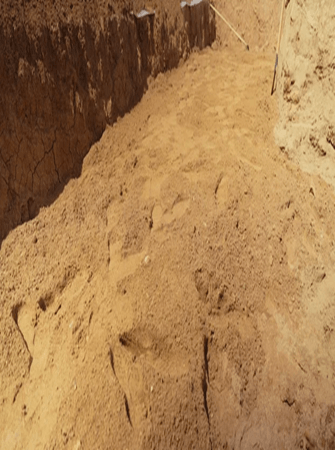
A sandy clay to clayey loam is the best soil type suitable for fish ponds. The soil should contain clay at appropriate percentage not less than 25% in order to hold water and avoid seepage. Also, organic matter in required mix with the soil in some amount to facilitate the growth of natural food especially plankton. A site or area with low pH and acid phosphate should be avoided for economic reasons.
Aquaculture Biological Factors
Species Selection
Another common self-imposed limitation is that of a prospective aquaculturist restricting himself to a particular species and refusing to consider other. It would be advantageous to select a species that existing farmers in the same geographical area have found culturable.
Once the species is selected, the availability of stockers (fry, fingerling or brood fish) must be determined. This information enables culturist to determine the desired production level, culture technique and rearing space requirements.
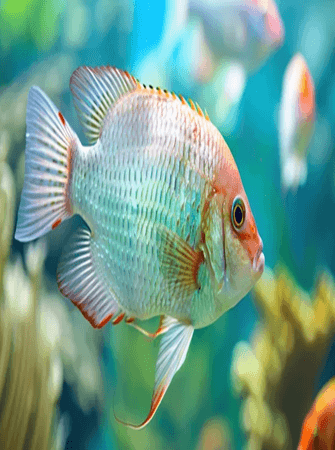
Also, at this point, the farmer may decide on the biomass loading and whether his operation will be extensive, semi-intensive or intensive in nature. The culturist may consider employing polyculture rather than traditional monoculture technique. The farmer is advised to begin fish farming with a single specie (mono specific culture) until operational expertise is gained.
Predator Control
Whatever the source, water used for aquaculture should be free of undesirable fish species, fish eggs and the egg and larval forms of insect predators. Screening should be the sure alternative if it is suspected that the source of water may contain these organisms.
The area should be made free of avian predator. These animals can often be controlled by shooting. However, this practice must be used with caution since hunting permit may be required and some species are protected by law.
Other methods to control predatory birds including using scare-crows, bird netting or noise devices such as small cannons. Some farmers are more creative and use radio-controlled model aircraft to frighten away predatory birds.
However, mammalian predators can be controlled by shooting or trapping. Again, the farmer should be familiar with local laws and ordinances. Some mammals and birds are classified as endangered or threatened species.
Aquaculture Ecomonic and Social Factors
Type of Facility
An important decision must be made regarding how the pisciculture crop will be practiced, whether in the ponds, raceways or in tanks or using some other culture method. Will the facility be used to spawn fish and sell the egg products? Will fish be raised to fingerlings or sold as food fish?
The choices in these matters will be limited by the amount of working capital available, land availability, operation skills, labour requirement, operating cost and other considerations.
Marketing
Marketing study should be made as an essential component of a site analysis long before land is purchased and facility construction begins. Understanding marketing strategies and ability to interpret the marketing climate are required of fish farmers. Several approaches to marketing are:
- Marketing-oriented Approach: The marketing analyst begins by identifying potential customers and their needs. The information gathered on type of product, price, promotion, distribution and other variables are then used to develop market strategy. The limitation of the approach is that a species for which there is high market demand may be lacking in production technology. As a result, market demand may be strong but supply weak
- Production-oriented Approach: This approach is typified by the producer who is accustomed to selling fish at the pond bank. This is typical of a fish farmer who produces a specific product before he establishes a market for the product. Market strategy is developed when customers stop coming to him directly.
- Environmental-oriented Approach: Often a fish farmer selects a species that is popular in a given area but for which production technology is lacking. A species for culture that will adapt to environmental conditions in a given geographical location is selected by the farmer using environmental approach. This is a self-imposed limitation
- Species-oriented Approach: This is also a self-imposed limitation where the farmer selects a given species and will not consider others. The farmer may find that his product has appeal only in a small geographical region.
Safety and Security
When aquaculture ventures are located in close proximity to densely populated areas, public health and the necessity of guarding against poaching and vandalism must be considered. Facilities must be kept appropriately clean so that noxious odours or vapour, which may affect local populated area are not produced.
Poaching and vandalism can be controlled by hiring full or part-time security personnel or by fencing off the property. Warning signs should be posted conspicuously on the property.
Social Considerations
It is technically wise to precede construction of any aquaculture venture with a public campaign to educate the local people on the benefits of having the venture in their community. Aquaculture can provide jobs and economic opportunities for local residents.
Local experts can be used to design the facility and construction. Professionals like competent and experienced fish farmers and skilled operators are essential for any major aquaculture enterprise.
Aquaculture Political and Legal Matters
The political situation in a site chosen for aquaculture development can be detrimental to the smooth operation and management of the proposed enterprise. A site chosen in a politically unstable area may result in inconsistency in production and may affect the marketing channel of the farm produce.
The legal aspects of the locality (Local Government, State of Federal) as regards land and water body ownership have to be known before acquiring a site for fish farming because it is important to have full control of the selected site so that the process of production can be adequately managed.


Share This Article: