
Profitable App Monetization Strategies
December 24, 2025, 4:13 pm
An application, or app, is a software programme that can be installed and run on portable devices such as a smartphone or tablet.
Apps can also run on laptops and desktop computers. Apps installed on portable and non-portable devices fulfil a multitude of functions and get tasks done.
APP CREATION CONSIDERATIONS
There are many reasons for creating an app but before you create an app, there must be a very important task or function it must perform for its users.
All successful apps serve a purpose or benefit that is very important to its users. If the purpose or function of your app isn’t important to the app users, then the app won’t be a successful one.
Some of the important things you should consider before creating an app are:
The Need for The App – It’s key to think about the appetite or need for an app, for both your business and your users or customers. Conducting research into this should help identify whether there is a gap in what your business provides and whether or not an app can bridge this gap.

The Budget – You need to consider the budget for the app, which will depend on the scale of the app – How much content will the app have? Will it need a big team to build? How do you want to market it?
The Operating System – You should also consider what operating system you wish to have the app developed for – whether you go with Android or iOS, or create something for both. There are pros and cons for each operating system type so it’s worth looking into what might be a more suitable platform for your app
In-house or Outsourced – Depending on the size of your company, you may have in-house developers who can create an app for you, or you may wish to outsource it to an agency or freelancer. This can often depend on the budget you have for the app so it’s good to consider your options across the board.
By having a developer on board, you will benefit from the skills and years of experience they can bring to the project. As can often be the case, business requirements can change over the course of a project so it’s useful to have the technical knowledge and expertise to hand.
Security – This is very important to consider if your app will be handling user data. You should ensure that customer data is kept safe and secure at all points of collection and storage.
BUSINESS BENEFITS OF APPS
If you have been able to answer the questions above positively, it’s important to know some of the benefits an app can bring to your business or service.
Here are just a few of the benefits your app can deliver:
Communication – An app can help you increase your communication with customers. You can promote your services through an app and build up a community through it
Support – You can provide extra support through an app so that customers can get help wherever they may be

Convenience – Having a link to your services at the user’s fingertips will prove to be invaluable to them as they’ll no longer be tied to a desktop computer or laptop to access your offerings
Visibility – An app offers increased visibility of your brand. Users and potential customers will be able to access your services from anywhere
Efficiency – An app can allow you to manage your business dealings with your customers more efficiently and directly, improving the business’s processes and potentially reducing costs in the long run.
SUCCESSFUL APP IDEAS
Mobile apps can be built for use in many areas such as providing general information about a product, news services, ticketing services, travel information, weather, messaging and much more.
However, for you to have a successful app, you must have a workable idea. Below are some ideas from proven use cases and sectors that you can tap from:
Social Networking
Apps that help people stay and keep in touch are in high demand. You just need to look around you to see how many companies have taken advantage of the need for people to socialize and interact with each other.
Companies such as Facebook, X (Twitter) and Instagram have had apps for years allowing for ease of interacting. More examples of apps in this category are Snapchat, Whatsapp and Facebook Messenger.
The key feature of social networking apps are being able to stay in touch whilst on the move. You can build apps in this category too. Just look at the existing apps in this category and add elements or features that you feel your target audience will appreciate that the existing social networking apps don’t have.

Shopping
Buying and selling is also another category of apps that you can consider. People now desire the comfort of buying and selling things from the comfort of their homes, offices etc.
In recent years, supermarket chains have ventured into the app world to help make shopping a more efficient experience for their customers. From the likes of Sainsbury’s whose app enables you to shop online from anywhere, this has taken the need for having to be at home by the computer or at the shops out of the equation. Other stores such as Waitrose have an app that allows you to scan your products as you go, leaving you to pay at the till and then go. And Temu app allows you to buy and import products from Chinese sellers.
There are also apps that help with transportation spending. Companies such as Trainline and Lothian Buses have got in the app game and make it easier for customers to buy tickets when on the go. Because the tickets are stored in the app, there’s now no need to worry about losing your ticket as it will be in your phone.
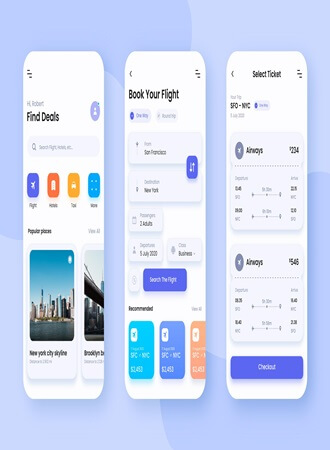
You can capitalize on this shopping trend by building a shopping app and incorporate AI into it. Your shopping app can have an AI Personal Finance advisor that analyses the spending pattern of its users and give frequent money advice. It can alert them to when their favorite items are on discounts, it can give them tips on how to save and manage their money too.
Health and Fitness
As the interest in health and fitness has increased in the digital age with the rise of health blogs and fitness accounts on Instagram, so too has the availability of health and fitness apps.
Users can monitor their stats when out running or cycling with apps like Strava. Not only can it track your progress, but it enables you to connect with likeminded individuals, creating a community. From running and other forms of fitness, to mindfulness and meditation, Headspace has become a popular app for those looking to take time out from a busy day.

You can improve on existing apps in this category by making an app that uses AI to track the habits (sleep, exercise, diet etc.) of your users and gives them personalized health and fitness recommendations.
Entertainment and Music
People love to be entertained on their mobile phones. As a result, streaming services have increased in popularity over the years with the rise of video technology that delivers high quality videos and sound over wireless networks. Having a music app like Spotify, or a video app like Netflix on the go has become useful for those who commute.
Learning
This is a category you should seriously consider if you have skills in areas that people are experiencing a lot of problems in. There is an explosion in the education and learning field as more people are looking to avoid traditional methods of learning to acquire skills for hobby, leisure and work.
There are several successful apps in this field such as Alison, Udemy, Duolingo etc.
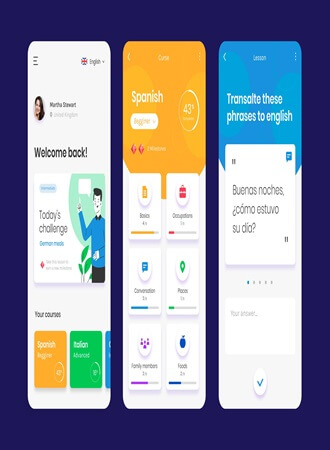
You can differentiate your app in this category by providing micro-learning for high income skills (sales, marketing, coding etc.) and hobbies (cooking, languages, singing, gardening etc.). Your app can deliver learning services via 5 to 10 minutes videos that can be tailored to the preferred learning style of the user.
Employment
This is another lucrative area to create an app because millions of people are unemployed and looking for jobs. Also, many of the people with jobs are under-employed which makes the target market for apps in this category very huge.
There are many apps in this category such as Indeed, LinkedIn, Glassdoor etc.
If you want to develop an app in this category, you can incorporate AI to help users customize their resumes, cover letters and apply for jobs.
Content Creation
The appetite for content consumption is on the rise as a result of the very large number of mobile phones and devices currently in the world. There are over 8 billion mobile phones in the world today and the users of these phones need content to consume (watch, read, listen)
To meet this demand for content, there has been a sharp increase in the number of content creators in the world. We now have millions of internet celebrities that are full-time content creators
If you have no plan of being a content creator, you can make the process of content creation easier for the millions of content creators all over the world.
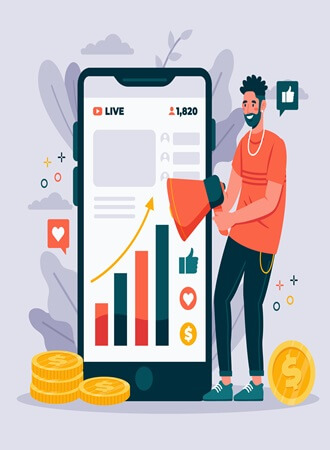
You can create an app for content repurposing. This app will take content in the form of text, blog posts, long videos and convert them into social media posts. The app can also handling the scheduling of these posts.
APP BUILDING METHODS
There are a number of different methods you can take to building an app, and it often depends on the operating system platform functionality of the app.
The major methods used in app building, based on platform functionality, are:
Native Apps
Native apps are applications that are made by the device manufacturer (Samsung, Apple, Huawei etc.) specifically for the device they’re being used on. For example, iTunes, iMessage, and iBooks are examples of native apps made by Apple for use on the iPhone. These apps are often considered to be the fastest and most reliable to use as they make use of the device features and user experience.

To build a native app, you must have a very good understanding of the specific operating systems (Symbian, Android, iOS etc.) and virtual environments (Java, BREW etc.) that the specific device manufacturers use
Cross Platform Apps
Cross Platform apps are made in such a way that they can work across different device manufacturers, which means they’re more flexible in where they’re used. There are two kinds of cross platform apps:
Hybrid Cross Platform – These are built with programming languages such as Java script, HTML 5 and CSS and then packaged as a native app. The look and feel of the app will be very similar to a native app that a user would be unlikely to notice the difference.
Native Cross Platform – These are similar to the Hybrid approach but remove HTML and CSS from the process and allow the packaged app to talk directly to the mobile Operating System. The apps can make use of the device user interface controls and can make development easier as this enables consistency between devices.
APP STORE APPROVAL REQUIREMENTS
Depending on the operating system platform you create your app for, there are dedicated stores for the most popular ones that mobile phone users can download from. These stores are Google Play store for Android apps and Apple store for iOS apps.
You can list your apps on this stores based on the platform your apps was created for. However, for your apps to be approved by these stores, it must adhere to some requirements.
Here is a breakdown of some of the major requirements to be met for successful submission of your apps to the mobile app stores:
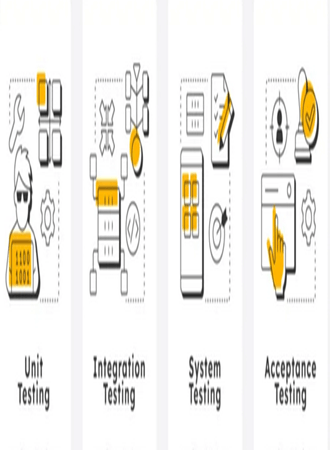
Make sure the app works – Test your app for crashes and bugs and ensure that it runs as smoothly as possible
Supply correct information – Ensure that all app information and metadata is complete and accurate when submitting
Keep contact information up to date – App review may need to get in touch with you so it’s important you supply the correct contact details and keep them up to date
Provide test materials – An active demo account and login information, plus any other hardware or resources that might be needed to review your app (e.g. login credentials or a sample QR code), may be needed in the course of the app’s review
Enable backend services – This is to ensure the app is live and accessible during review
Image/Other content rights – Only use images, animations and other content you have the rights to
APP MONETIZATION STRATEGIES
In order for your app to be successful and profitable, it must have a means of generating income for you. Considering whether or not you should charge for your app can be tricky.
There are a couple of factors to consider here such as how the app platform may affect any profitability, the industry your app is in and how your chosen audience may interact with your app.
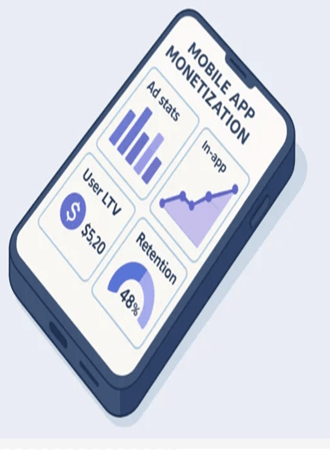
It’s worth looking into how other apps have been priced and what considerations were made. If you do decide to charge customers, or you want to make money from your app, here are a few strategies to consider:
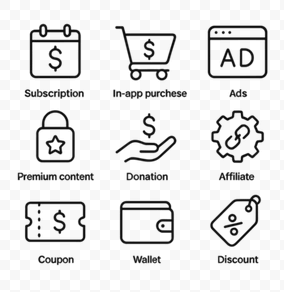
Advertising
Displaying third party ads can generate revenue via clicks, views or conversions but it should be noted that ads mustn’t be intrusive to the user’s experience. There are a range of ad options from video and banner ads, to native and interstitial ads.
Freemium
This allows the user to try out the basic elements of the app for free, with the option of paying for more content later on.
In-app purchases
This allows the user to pay for certain content or products within the app.
Subscriptions
This method is already in use by some of the most popular apps out there such as Netflix and Spotify. By paying a small monthly sum each month, the user has access to plentiful content. It’s important to make sure that content is kept fresh and interesting so that users feel they have a reason to stick around month after month.
Sell Insights
Instead of selling your users data (phone number, email etc.) to advertisers, you can sell insights derived by your apps’ usage. For example, a health and fitness app can sell workout trend reports to gym owners so they know what type of equipment to stock in their gyms. A shopping app can sell food and diet trend reports to restaurant and supermarket owners which can guide their stock inventory.

Feature Renting
If your app offers premium features for paying users, you can offer a payment package for users who don’t want to upgrade to full premium users but would like to enjoy some of the features you have for premium users on a short-term basis. For instance, if your app that let’s premium users access exclusive content for 30-days, you can have a rent feature that lets non premium users access the exclusive information and reports for a shorter period of 1 or 3 days.
Personalization
This income strategy allows you to sell individualized or customized services to your app users, for the problems or tasks your app was created to solve. For example, if you have an employment app, you can sell job interview coaching services to users
APP PROMOTION METHODS
Regardless of the income-generation model you choose for your app, without people knowing about and using your app, it would be a waste of your time and effort.
This is why it’s essential you know how to promote your app and get people to download and use them. You can promote your apps in the following ways:
Website
An obvious one but your website should be one of the first places to put information about your app on. This could be anything from a panel on the home page with a description and a link to whatever stores it may be in, to a page dedicated to what your app is about and why it would be a benefit for someone to download.
You can also place your apps on third-party websites that promote apps to the investing public. With this approach, you can get people to invest in your app and know more about your app.
Below are two top app business listing websites that you may consider using:
Appbusinessbrokers – It is a brokering firm that help in selling of apps and online businesses
Apptopia – It is a website that lists apps and share app performance data with the investing public.

Social Media
Promotion for your app should be done across your social media channels. Make sure you frequently post on Facebook, X and LinkedIn so your audience can find out more about your app and what it can do for them. If you have an Instagram account, posts detailing your app and a link in the bio can work, and you can also link to it in the Stories feature.
With these platforms, you can also invest in sponsored posts or promotions to help get the word out quicker to a larger audience.
Also try to get reviews about your apps from its users and share them on all your social media channels.

Press Release
You can send out information about your app to industry specific publications and sites, which can help widen the scope for who sees and knows about your app.
App Store Optimization
This may seem like a daunting one as there are so many apps on the stores today but you can carry out something called App Store Optimization, which will let more people discover your apps.
Some of the optimization promotion actions you can perform are:
- Your app name is unique and stands out
- Include keywords so it’s easy to find
- Describing your app clearly and keeping that information up to date
- Including a few screenshots or video footage so potential customers can get a sneak peek into how the app works
- Make sure your app functions smoothly and users enjoy the experience. That way, positive ratings should be easy to get and therefore boost the visibility of your app
App Store Search Ads
Apple introduced Search Ads, which is basically paid advertisement within the App Store. This means you can bid for relevant keywords so that when a user is searching for apps using a particular term, your app appears first
CONCLUSIONS
Apps are here to stay and despite the millions of apps that are already existing, the world still need innovative apps that can solve pressing problems.
With the techniques and strategies explained in this article, you have a roadmap to turn your idea into an app and successfully monetize it.
REFERENCES
Mobile Application Development by Dr. Babasaheb Ambedkar
App Development Guide by Digital Scotland












Share This Article: