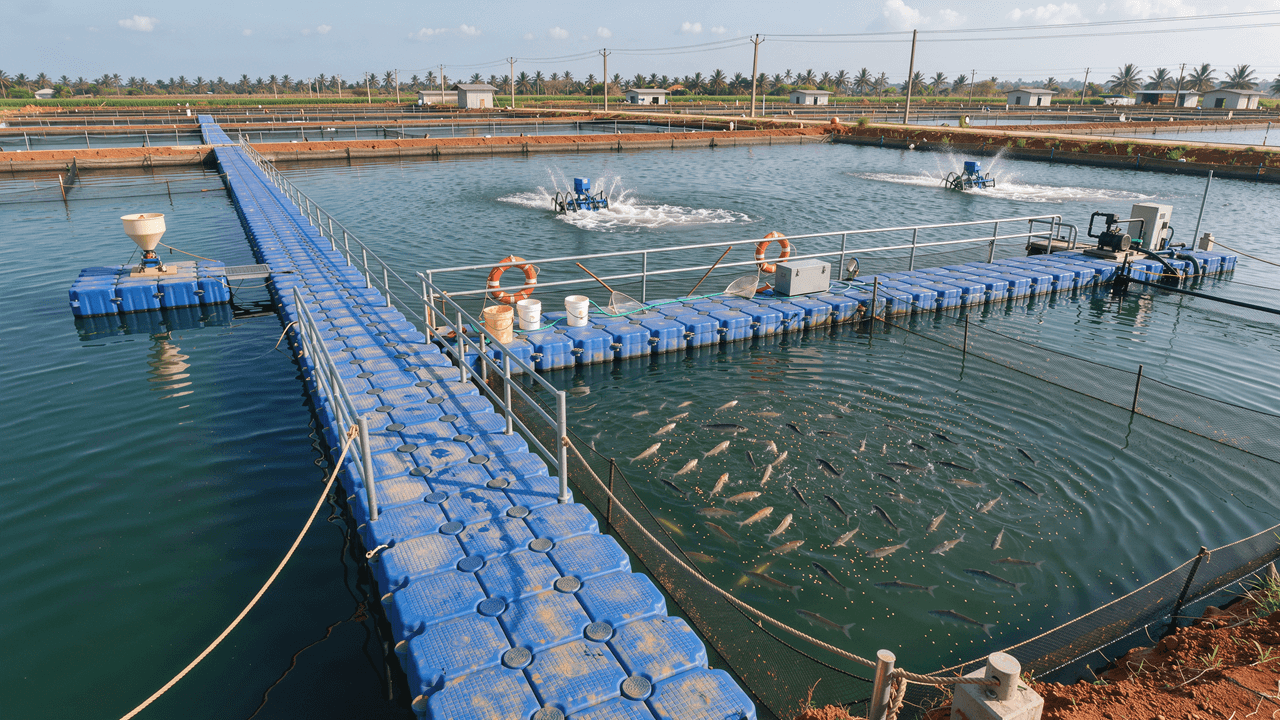
Designing Safe Access for Farm Ponds: The Role of Floating Walkways in Aquaculture
November 23, 2026, 8:54 am
A farm pond’s size, location, and water supply are key considerations in planning your aquaculture operation.
These decisions shape the environment where fish will grow and the work required to manage it. The design must also account for the people carrying out that work. You and your staff need suitable routes to reach different working areas throughout the production cycle, which makes safe access a priority alongside the pond’s other design requirements.
The right access arrangement depends on the pond’s layout and the tasks workers need to perform. Among the options available, floating walkways may be worth considering.
What Are Floating Walkways?
A floating walkway is a path supported by buoyant floats that hold its walking surface above the water. It typically consists of connected sections that form a route across part of a pond or another water body. A gangway can link the floating sections to the bank, providing a connection between land and water. This setup can be configured in different lengths and layouts, depending on the locations it needs to reach.
The floats allow the walkway to rise and fall with changing water levels within its designed operating range. An anchoring or mooring system holds the structure in position while allowing for that vertical movement. In aquaculture, this setup can provide a route to equipment installed over the water, such as pumps mounted on floating platforms.
What Are the Benefits of Floating Walkways?
Floating walkways offer more than a connection between the pond bank and water-based equipment. They can also provide practical benefits that can support your farm’s daily operations. Here are some ways floating walkways can help you and your staff.
1. Safer Access to Working Areas
Pond banks can become muddy or uneven, making footing uncertain during daily work. A properly designed floating walkway, complete with slip-resistant decking and handrails, provides a defined surface for safely reaching areas beyond the bank This can reduce the need to walk on unstable ground, particularly in areas that become difficult to navigate after rain.
2. Easier Routine Pond Tasks
Daily pond management involves repeated tasks, including feeding fish, observing their behavior, and collecting water samples. A walkway positioned to accommodate these activities can give you and your staff convenient places to work. For example, a designated sampling point provides a dedicated location staff can return to for regular checks. This can make the task easier to incorporate into the farm’s daily routine.
3. Fewer Disruptions from Changing Water Levels
Water levels can shift with rainfall, evaporation, and water use, changing the distance between the pond surface and fixed structures. Floating walkways follow these changes within their designed operating range. With a suitable shore connection and mooring arrangement, the route can remain usable across expected water levels. This helps you continue scheduled pond tasks without repeatedly changing how staff reach their working areas.
What Should I Consider When Choosing Floating Walkways for My Farm?
The right floating walkway should suit both your pond and the work you need to carry out. However, the available systems can differ in ways that affect their suitability for your farm. A closer look at the following factors can help you compare your options and make an informed choice.
1. Modular Design and Custom-Built Options
Your pond’s layout may change as your farm expands, and a floating walkway that supports this growth can easily accommodate new working areas. This is where modular construction can help, as it allows you to add, remove, or rearrange sections to adapt the route.
Reputable suppliers offer custom-built options to accommodate specific dimensions and connection requirements. Liquimech, for example, supplies modular floating walkways and custom-built gangways for water management infrastructure. A discussion with your supplier can help establish which arrangement suits your pond and the working areas you need to reach.
2. Material Durability
Your walkway needs to withstand regular water exposure and long hours in the sun. These conditions make the choice of walkway materials particularly important for long-term use. Among the available options for floats, high-buoyancy, UV-stabilized polyethylene is worth considering. Its buoyancy helps support the walkway’s intended load, while UV stabilization helps protect the material from sun damage.
3. Safety Features for Wet Conditions
Wet conditions are a regular part of pond work, but their effect on working conditions still deserves attention. In particular, moisture can make walkways slippery and may cause workers to lose their footing. In this environment, a floating walkway’s safety features can help reduce the risk of slips and falls.
For instance, slip-resistant decking improves footing, allowing workers to move along the route more confidently. Anti-slip mesh cleat overlays can also improve traction on suitable inclined sections. Moreover, high-visibility handrails provide support and edge protection, while their bright finish makes the walkway’s boundaries easier to see. With these features in place, the floating walkway can provide a safer route for routine tasks.
Your aquaculture pond’s design shapes the working environment you and your staff rely on each day. For this reason, safe movement around the water deserves consideration. A floating walkway can help put that priority into practice. The right setup gives you and your staff a dependable route for daily tasks, with flexibility to adapt as your farm develops.





Share This Article: