Yuca: Nutritional Components And Cooking Methods
November 17, 2026, 8:56 am
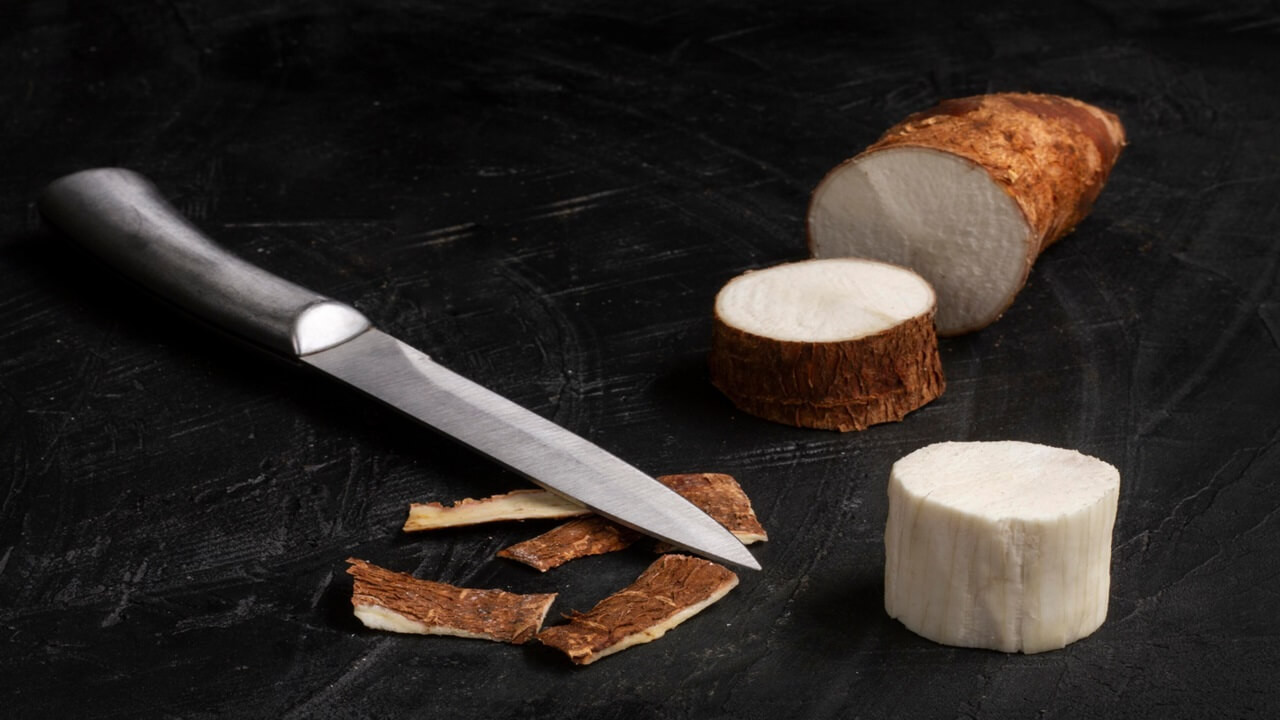
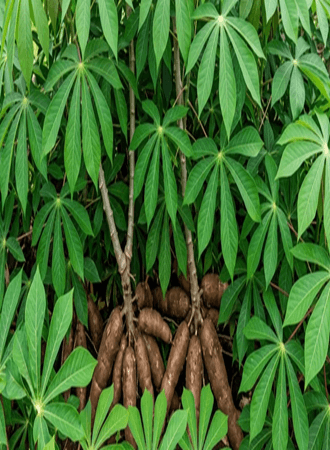
Yuca is a long tuberous starch root crop that can reach lengths of 7 to 15 inches and diameters of 2 to 3 inches.
The peel of yuca root is often dark brown, but it can occasionally be light brown or white, and the flesh is typically white or cream in color. Yuca, also referred to as cassava, is mainly cultivated in tropical countries.
In underdeveloped and tropical countries, yuca is the second most important source of carbohydrates after rice, and the fifth most important staple crop globally. Yuca is a major source of income and sustenance for more than 500 million people in developing countries.
Yuca Nutritional Components
According to analysis, yuca contains the following chemical components that make it a good source of food and nutrition:
| Chemical Component | Proximate Composition (for 100g) | Yuca Roots |
| Macronutrients | Food energy (kJ) | 526—611 |
| Dry matter (g) | 30—40 | |
| Protein (g) | 0.3—3.5 | |
| Lipid (g) | 0.03—0.5 | |
| Carbohydrate (g) | 35—38 | |
| Dietary fiber (g) | 0.1—3.7 | |
| Ash (g) | 0.4—1.7 | |
| Vitamins | B1: Thiamine (mg) | 0.03—0.28 |
| B2: Riboflavin (mg) | 0.03—0.05 | |
| B3: Niacin (mg) | 0.6—1.1 | |
| C: Ascorbic acid (mg) | 15—50 | |
| A: Carotenoids (mg) | 5—35 | |
| Minerals | Calcium (mg) | 16—176 |
| Phosphorus (mg) | 6—152 | |
| Iron (mg) | 0.27—14.0 | |
| Potassium (g) | 0.25—0.27 | |
| Magnesium (g) | 0.03 | |
| Copper (ppm) | 2.0 | |
| Zinc (ppm) | 14 | |
| Sodium (ppm) | 76 | |
| Manganese (ppm) | 3 |
A breakdown of yuca’s nutritional components are as follows:
Macronutrients
Carbohydrate gives the body energy and yuca’s carbohydrate content is high (35−38% fresh weight) − a result of the high starch content of Yuca. For this reason Yuca roots are considered mostly as an energy food. Yuca contains more carbohydrates than potatoes and cereals (i.e. wheat, rice, maize and sorghum). The main simple sugars are sucrose, glucose, fructose and maltose. Total sugars range from 0.2% to 18.8%, with 3.7% on average and reducing sugars between 0 and 15.7% with 1.2% on average.

Up to 17% of the carbohydrates in sweet Yuca varieties were sucrose, with very small amounts of fructose and dextrose. According to a study by Padonou et al. (2005), bitter yucca varieties have higher total sugar levels than sweet ones. The bitter taste of the cyanogenic glucosides may be hidden by greater levels of sugar in some bitter varieties.
Fiber improves the body’s digestive health and gut microbe. Fiber content− quite low in yuca roots − ranges from 0.1% to 3.7%, and is influenced especially by root age.
Protein and lipid contents, which help in building the body’s tissues, (up to 3.5% and 0.5%, respectively) are considered low in Yuca compared to seed products such as grains. Lipid content of Yuca was lower than that found in maize and sorghum; however, it was higher than that found in potato and comparable to rice. The protein content was much lower than that of maize and sorghum, which have about 10% protein. In Yuca roots, half of the protein content consists of whole proteins, whereas the other half is amino acids.
Some essential amino acids such as methionine, cysteine and tryptophan are present in very low quantities; nonetheless, other compounds such as arginine, glutamate and aspartate are present in substantial amounts.
Minerals and Vitamins
Yuca roots contain calcium, iron, potassium, magnesium, copper, zinc and manganese in levels comparable to those of many legumes. These minerals and vitamins are essential for the smooth running of many of our body’s essential functions like wound healing, hormone regulation, strong bones and fighting infections.
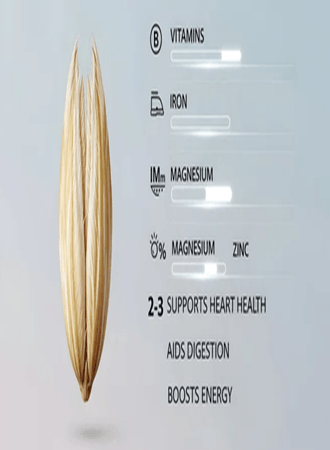
Researchers reported average levels of 590 mg/kg of calcium on a dry matter basis. Levels for iron and zinc of 9.6 mg/kg and 6.4 mg/kg, respectively, were reported in roots (Chavez et al., 2000). These levels were considered low to meet nutritional requirements according to nutritionists, and there is a need to improve these essential minerals in Yuca.
Vitamin C (ascorbic acid) content in Yuca roots is relatively high − from 15 to 45 mg/100 g in the edible portions. On the other hand, low amounts of the B vitamins (thiamin, riboflavin and niacin) were reported. Vitamins C and B are volatile and their content was reported to be significantly lower during cooking.
Food Security Importance of Yuca
Products from yuca roots are often staple foods and therefore critical to food security in sub-Saharan Africa, especially by providing the carbohydrate component of the diet. Mineral and vitamin levels in yuca roots are overall lower than in most cereals, legumes and other root and tuber crops. In addition, these levels are further reduced during cooking.
Yuca roots are high sources of energy but have low protein, fat, and lack essential minerals and vitamins (Montagnac et al., 2009). Products from Yuca roots therefore require either genetic improvement and/or addition of other dishes that can complement these deficiencies (e.g. sauce, meat, fish and vegetables – including Yuca leaves). The strategy (genetic improvement or diet diversity) will depend on the particular nutritional component and the relative access to genetic diversity versus access to diverse diets. In many cases, a combined, complementary approach can be used.
Difficulties of Eating Yuca
Despite its many nutritional benefits, the Yuca has several drawbacks and difficulties:
• Yuca roots and leaves contain cyanogenic glucosides that, when hydrolyzed, create the extremely toxic hydrogen cyanide (HCN), which is deadly if ingested.
• The shelf life of yuca roots is only two to three days after harvest.
Yuca Cooking Methods
The main constraint of Yuca for direct consumption is its cyanogenic properties. Both roots and leaves can contain large amounts of cyanogenic chemicals, which are dangerous if the food product is not properly cooked.
This feature of yuca has resulted in the development of numerous cooking methods. The cooking method and the number of cooking steps are linked to the level of cyanide content (low cyanide: sweet yuca varities and high cyanide: bitter yuca varieties).
The food products that can be derived from yuca via the correct cooking methods can be divided into two categories:
1. Non-fermented products that are cooked to a stable or consumable form in a single step.
Sweet varieties of Yuca (that may contain low levels of cyanogenic compounds) are used for processes that generally involve only a single step because of the low initial cyanogenic compound that can be reduced easily to a safe level for consumption. High dry matter content varieties are generally preferred because the texture is firmer and less moist.
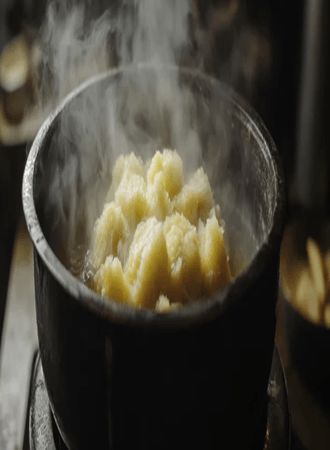
Boiling or frying are the most common cooking methods here. After peeling, roots can be processed as whole or as chunks or slices. Cooked or boiled yuca as whole roots or pieces of different varieties have diverse tastes (e.g. variable sweetness) and texture (e.g. different levels of stickiness, or softness)
2. Fermented products that are made by several steps of cooking.
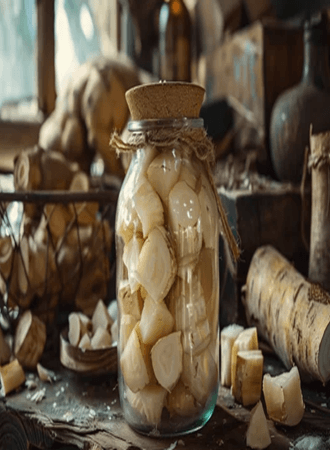
This applies mostly to the bitter-type varieties that require cyanide detoxification. Roots and leaves contain enzymes (i.e. β-glucosidase) that are released from the cell vacuoles during cooking and cleave the cyanogenic compounds when put into contact through processing steps such as grating or pounding. Subsequent operations (i.e. fermentation; cooking or roasting) are important to ensure that cyanide is fully volatilized from the product.
Yuca Fermented Food Products
There are two types of root fermentation methods used in producing yuca food products:
- Submerged fermentation or soaking of the whole roots
- Solid-state fermentation (directly on the mash)
Submerged Fermentation Yuca Food Products (Fermented by water submersion)
Fermentation by submersion means that whole yuca or pieces of yuca are immersed in water and left to ferment for several days. Fermentation has long been used as a means of food preservation, and it is a process with an ancient history in yuca that fermentation of yuca is a process by which specific and appreciated product flavours are developed, and the multiplication of lactic acid bacteria that acidifies the medium limits the proliferation of undesirable and pathogenic microorganisms (e.g. E. coli).
Some of the popular yuca food products made by submerged fermentation are:
Fufu
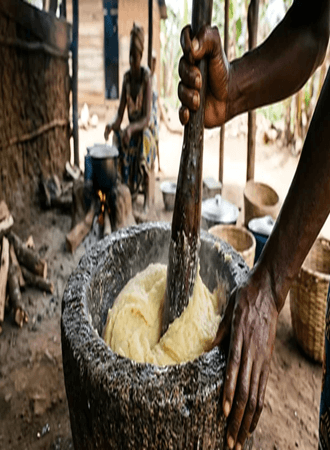
Fufu refers to different food products depending on the country where it is found. In Ghana, fufu is a non-fermented paste made out of roots from sweet varieties that are boiled and pounded. In Nigeria, fufu refers to a fermented dough that is made of yuca (whole or slices) steeped in water and fermented for up to three days, sieved and then cooked into a homogeneous paste. Fufu is one of the staple foods in both these countries.
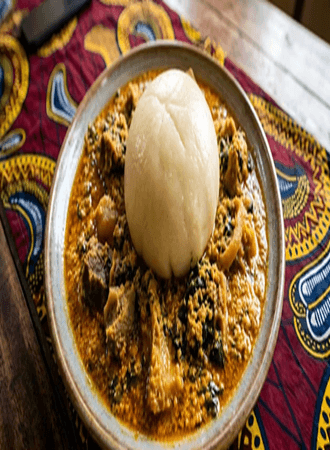
Fufu develops its typical taste and aroma during fermentation. A smooth texture, a characteristic aroma and a homogeneous colour are important quality criteria for the consumers.
Lafun
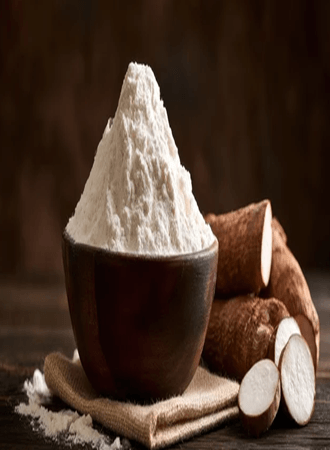
Lafun is a fibrous flour popular in Nigeria. When reconstituted into a paste it looks similar to fufu. In the traditional lafun preparation, fresh yuca roots are cut into chunks and steeped for 3–4 days or until the roots become soft. Chunks are then sun-dried for several days and then milled into flour. Unlike fufu, lafun is not sieved and therefore the fibers are still present, which gives it a coarser texture.
Chikwangue and ‘bâton de manioc’
Chikwangue, also called yuca bread, and similar products such as ‘bâton de manioc’ are common forms of yuca consumption in Central Africa, in mostly French-speaking countries (i.e. Cameroon, Gabon, Congo, DRC). Chikwangue and ‘bâton de manioc’ are prepared by peeling and chopping roots into pieces that are left covered in water for about 2 days.
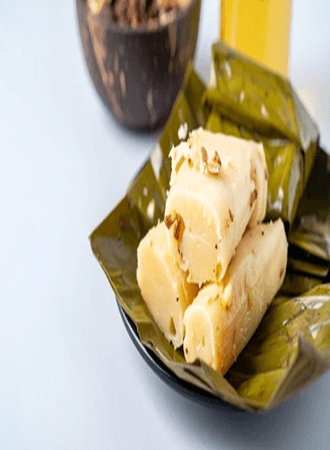
Afterwards central fibers are removed, the pieces washed with clear water, squeezed and made into a smooth paste. The paste is then wrapped in young leaves (Megaphrynium macrostachyum, or other species of Marantaceae (arrowroot family)) bound with raffia grass and boiled or steamed. Sometimes the product is pre-gelatinized in the first cooking and cooked fully in a later cooking.
Solid-state Fermented Yuca Food Products
As opposed to submerged fermentation, solid-state fermentation is conducted directly on the product without addition of water. Yuca roots are generally processed into a mash that is then fermented for variable periods (1–5 days).
In most cases, fermentation is a spontaneous one where the indigenous floras present in the mash are responsible for inducing the fermentation. A drying step sometimes is added after the fermentation in order to obtain a product with a longer shelf life.
Some of the popular yucca food products made by solid-state fermentation are:
Gari
Gari is a slightly acidic and semolina-like food product that is very popular in West Africa (e.g. Benin, Nigeria). In Nigeria, gari is the main staple food and therefore plays an important role in food security. Gari is made by peeling (washing), grating, fermenting, pressing and roasting yuca. Gari can equally be eaten dry or reconstituted into a paste (using boiling water) called eba.
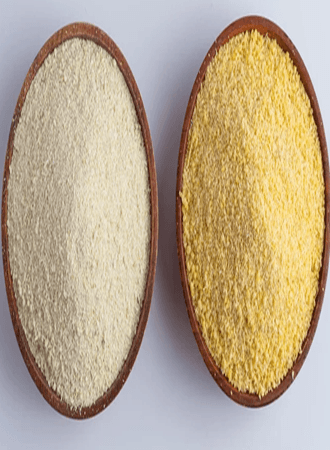
There are different types of gari based on the duration of fermentation, the size of the granule, addition of red palm oil etc. Levels of quality are based on the physicochemical characteristics of the roots, the hygiene practices and degree of coarseness. Ability of gari to swell when reconstituted into eba by the addition of boiling water may also be an important quality criterion
Kpokpogari
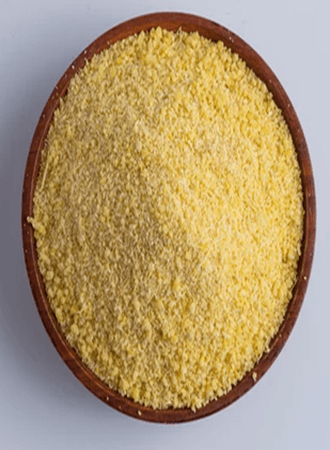
Kpokpogari is a variant product from gari that is popular in the Niger-Delta area of Nigeria. During cooking of kpokpogari, the starch portion of the product is separated from the fibrous portion by sifting with addition of water. The fibrous part is collected and after fermentation roasted in a hot pan. During the roasting step, the mash is constantly stirred until obtaining an intermediately dried product (kpokpogari) with granules that are larger than common gari.
Attieke
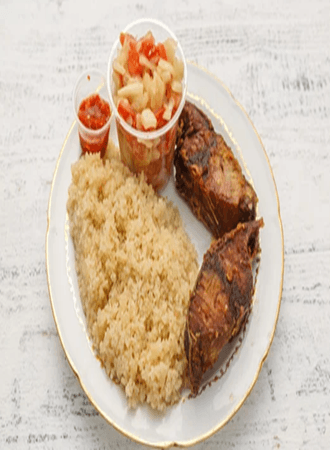
Attieke is a semolina-like product popular in Côte d’Ivoire, similar to gari and kpokpogari. The initial steps of preparation are similar to gari but the latter steps involve sun drying and steaming instead of roasting. Attieke has a slightly sour taste and is similar to couscous in appearance.
Agbelima
Agbelima is a fermented dough commonly consumed in West Africa (i.e. Ghana, Togo and Benin). Cooking steps are peeling, grating and fermenting similarly to other solid fermented products. However, as opposed to gari and fufu products that undergo spontaneous fermentation, the preparation of agbelima involves addition of kudeme, a traditional fermentation inoculum, which aids the breaking down of the texture through the activity of a number of tissue-degrading enzymes.

The product is mostly consumed in a wet form. A dried form (flour) was however developed by FRI (Food Research Institute) in Ghana, but the local consumption is still marginal and the flour is mostly promoted for exportation.
CONCLUSION
In summary, there are various types of food products created from yuca roots (non-fermented or fermented; dried or wet), and the cooking method is generally determined by the cyanogenic content of the roots (sweet or bitter).
Single-step food products, such as boiled or fried whole roots or pieces, come from sweet yucca variety, whereas multi-step food products, such as fufu, lafun, chikwangue, gari, agbelima, and attieke, are primarily from bitter yucca varieties.
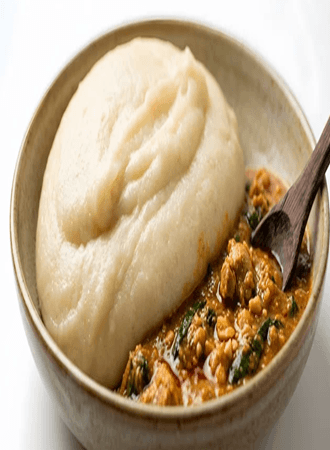
Yuca food products are frequently regional in nature, and different ethnic groups prepare them differently. Additionally, the sort of food products made from yuca are climate related: for example, wet foods like baton and fufu are generally produced in tropical humid climates, whilst food products such as lafun that require sun drying are preferably made in drier and more Sahelian climates.
Sources and References
Use and Nutritional Value of Cassava Roots and Leaves as A Traditional Food by Aurelie Bechoff, University of Greenwich, UK







Share This Article: