Cattle Farming Systems
October 19, 2026, 7:59 am
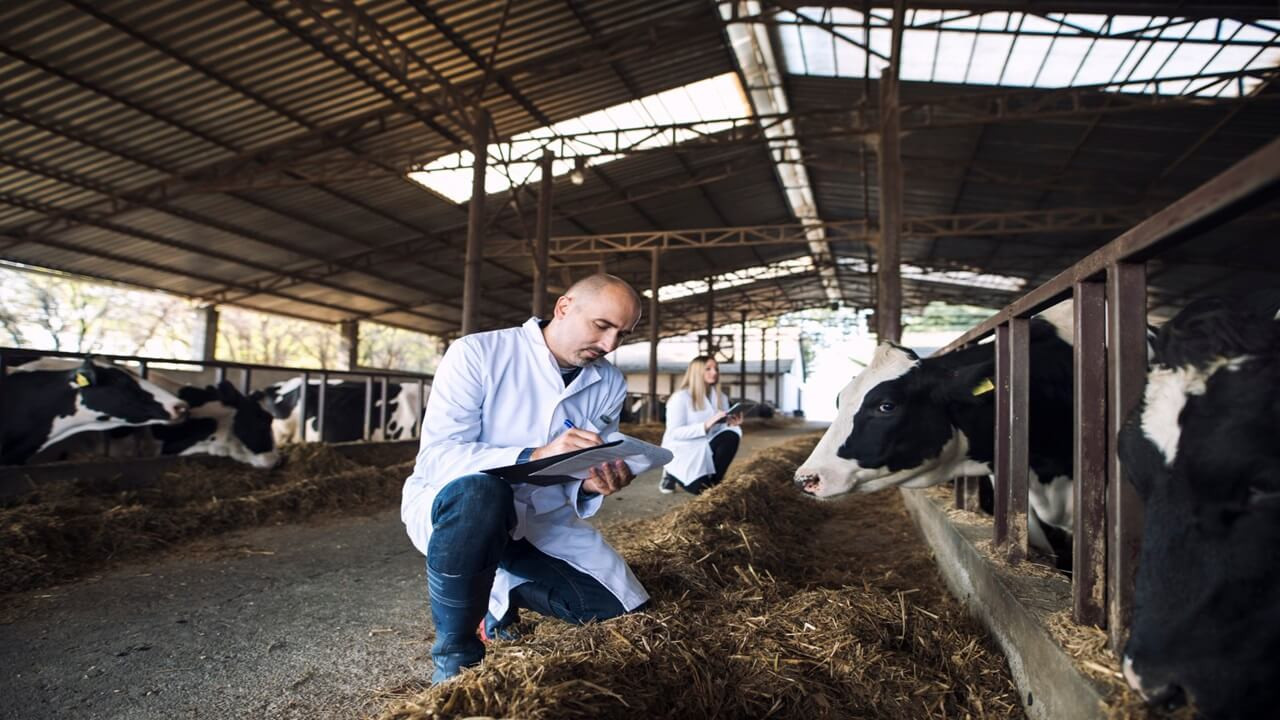
Cattle farming systems are the methods by which cattle are raised for the production of milk and meat.
Cattle Farming Systems
There are three major systems or methods by which cattle can be farmed or raised. These systems are: extensive, intensive and semi-intensive.
Extensive Cattle Farming System
Cattle are often reared on the range or rough grassland, which is of little or no value for any other form of agriculture. Usually, large unimproved grassland is required for this type of practice. Cattle often trek long distances in search of grazing and water. In West Africa, for instance, the majority of cattle are found in the dry savannah zone where the wet season period lasts for about a month in the year.
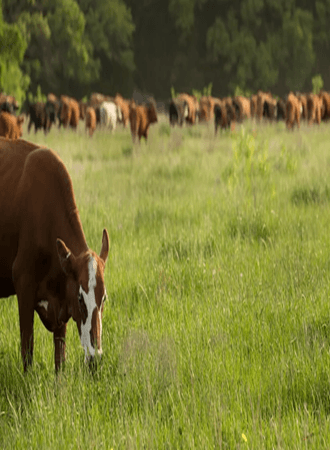
Some cattle owners move their cattle southwards where the wet season period is much longer and pasture is available for most of the year. It is least expensive of all systems in beef cattle farming.
Intensive Cattle Farming System
This is the farming of cattle under conditions of confinement in which the needs of the animals is provided. The system is expensive as the buildings and fences have to be erected for proper handling. The animals are also supplied with all necessary feedstuff all year round while the required drugs are administered regularly.
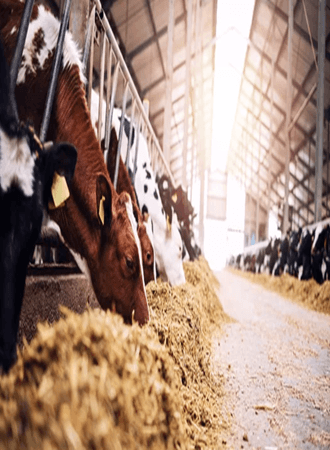
Apart from exercise, the animals do not have to trek for food and water. Under the system, it is quite possible to keep complete performance records of the animals.
Semi-intensive Cattle Farming System
The semi-intensive system of cattle farming is by far the most important in the agriculturally developed countries of the world. While the extensive system is cheap, it does not give room for rapid increase in the quantity of beef and milk produced to meet the increasing demand or permit improvement in quality of animals produced.
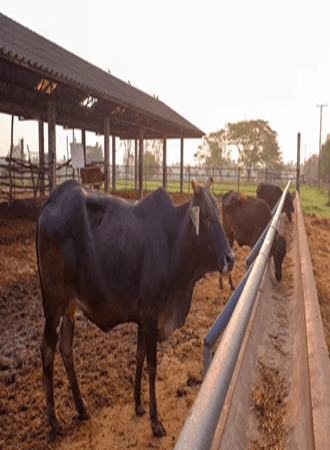
The intensive system on the other hand is highly limited to the farming of specialized type of beef or dairy. The semi-intensive system can be described as a ‘bridge’ between the extensive and intensive systems.
There is no standardized procedure for the semi-intensive system of beef cattle farming. The main objective is to produce good quality beef or dairy as rapidly and cheaply as possible. The animals are allowed to take advantage of available green pasture during the wet season. But during the dry season or period of food scarcity, feed in the form of hay and silage is supplied to the animals.
Feeding of Cattle
Cattle feeding practices vary according to the relative availability of grasses and grains. Where grasses are abundant and grain is limited, cattle are primarily grown or fattened on roughages.
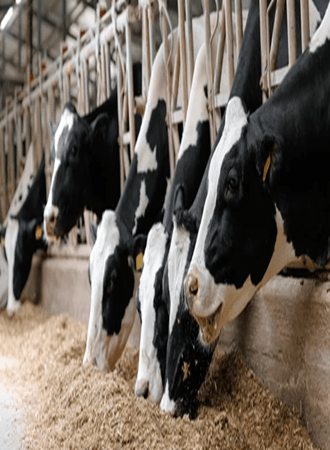
On the other hand, where grain is abundant, fattening with concentrate is common. The type of pasture, as well as its carrying capacity varies according to topography, soil and climate. In general, regardless of species or mixtures, pastures may be classified as permanent, rotation, or temporary and supplemental.
Breeding in Cattle
Age at Puberty
The normal age of puberty of cattle is 8 to 12 months. The age at which puberty is attained however varies according to the breeds (with the smaller breeds having an earlier onset of puberty than the larger, slower maturing ones); nutritional and environmental factors (with puberty occurring when animals have reached about one-third of their adult size)
Age to Breed Heifers
The age at which to breed heifers will vary with growth and development. However, when heifers are reasonably well grown, a safe rule is to breed at the first breeding season after they are fifteen to twenty months old.
Cattle Heat Period
This is the period during which the cow will accept the bull for mating and conception and this period usually lasts for 16 to 20 hours. Cows tend to have a pattern of external behaviors; for example, they come in heat during the morning hours, go out of heat in the evening or early part of the night, and then ovulate approximately fourteen hours after the end of heat.
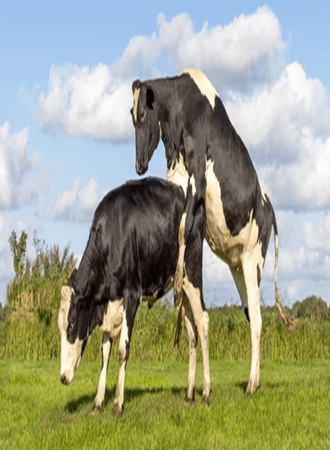
Females of all species bred near the end of the heat period are much more likely to conceive than if bred at any other time. The heat period reappears approximately at 19 to 20 days intervals, but it may vary for 16 to 24 days. In most cases, cows do not show signs of oestrus until some six to eight weeks after calving, or in some instances even longer.
Occasionally, an abnormal condition develops in cows that make them remain in heat constantly. Such animals are known as nymphomaniacs.
Care and Management of Bull
Outdoor exercise throughout the year is one of the first essentials in keeping the bull virile and in a thrifty condition. The finest and easiest method of providing such exercise is to arrange for a well fenced, grassy paddock (about two acres is a good size for one bull). Many valuable sires have been ruined through close confinement in a small stall—or more likely yet—through being kept knee deep in mud within a small filthy enclosure.
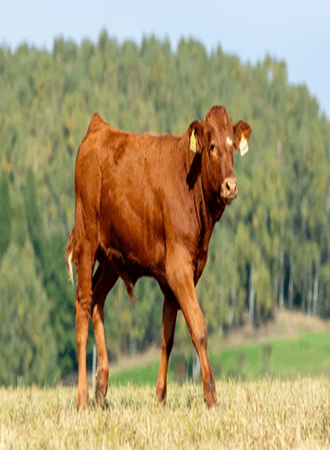
In addition to the valuable exercise obtained in the grassy paddock, the animal gets succulent pasture, an ideal feed for the herd bull. A satisfactory and inexpensive shelter should be provided for the bull. The most convenient arrangement is to have this within or adjacent to the paddock, so that the bull may run in and out at will.
Care of the Pregnant Cow
The nutrient requirements of the pregnant cow are less rigorous than those during lactation. In general, pregnant cows should be provided as nearly year-round pasture as possible. During times of inclement weather or droughts, supplemental feeding such as dry roughages and silage are necessary. No shelter is necessary except during periods of inclement weather.
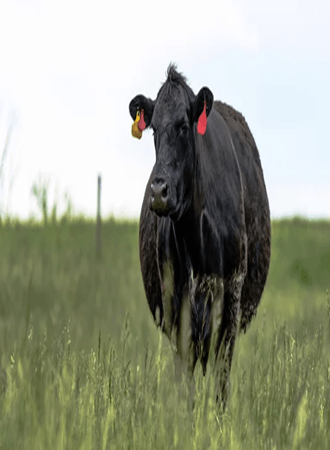
Normally, the cows will prefer to run out-of-doors. This desire is to be encouraged in order to provide exercise, fresh air and sunshine. Where and when shelter is necessary, it should be neither elaborate nor expensive. An open shed facing away from the direction of prevailing winds is quite as satisfactory for the protection of dry cows as a barn with individual box stalls and it is far less expensive.
The chief requirements are that the shelter be tight overhead, that it be sufficiently deep to afford protection from inclement weather and remain dry. That it is well drained, and that it is of sufficient size to allow the animals to move about and rest or sleep in comfort.
Preparation for Calving
At the time the signs of approaching parturition seem to indicate that the calf may be expected within a short time, arrangements for the place of calving should be completed. During the seasons of the year when the weather is warm, the most natural and ideal place for calving is a clean, open pasture away from the other livestock.
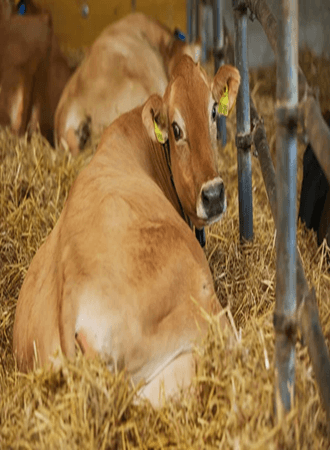
Hogs should not be allowed in the same place with the cow, for they are likely to injure or kill the young calf. They have been known to injure the cow. Under pasture conditions, there is decidedly less danger of either infection or mechanical injury to the cow and calf. During inclement weather, the cow should be placed in a roomy (3m2 or 4m2) well-lighted, well-ventilated, comfortable box stall or maternity pen which should first be carefully cleaned, disinfected and bedded for the occasion.
Normal Presentation
Normal single presentation; the back of the foetus is directly toward that of the mother, the forelegs are extended toward the vulva, and the head rests between the forelegs. If it is necessary to render assistance, apply ropes above the ankle joints and pull alternate downward on each leg as the cow strains.
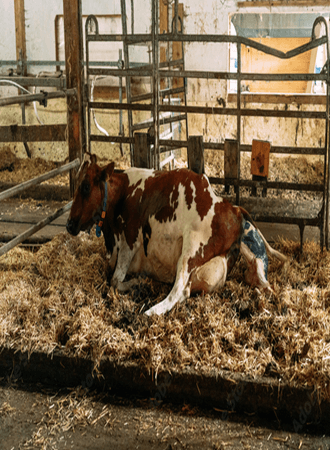
With posterior presentation (hind feet first), there is likely to be difficulty in calving. Moreover, there is considerable danger of having the calf suffocated and strangulated through rupture of the umbilical cord.
Newborn Calf
If calving had been normal, the cow could usually take care of the newborn calf, and it is best not to interfere. However, in unusual cases, it may be necessary to wipe the mucus from the nostrils to permit breathing. This may be done by blowing into the mouth, working the ribs, rubbing the body rather vigorously, and permitting the calf to fall gently.
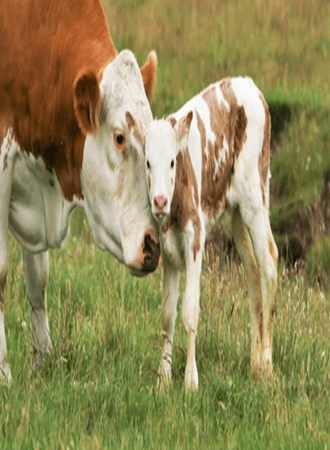
The cow should be permitted to lick the calf dry. A vigorous calf will attempt to rise in about fifteen minutes and usually will be nursing in half an hour to an hour. The weaker the calf, the longer the time before it will be able to be up and suck. Sometimes it may even become necessary to assist the calf by holding it up to the cow’s udder. The colostrum is most important for the wellbeing of the newborn calf.
Colostrum is very important for the calf to take because:
- It contains antibodies which temporarily protects the calf against certain infections, especially those of the digestive tract
- It serves as a natural purgative, removing faecal matter which has accumulated in the digestive tract
- It contains very high vitamin A, from ten to a hundred times that of ordinary milk.
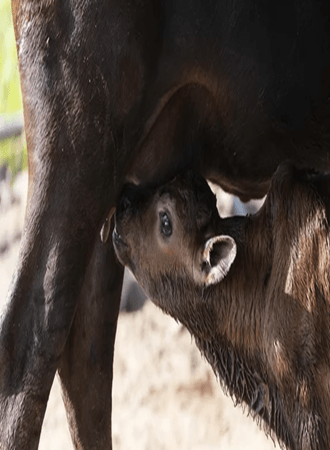
Usually, it is best to keep the cow and calf in a small pasture for a few days. After this, they may be turned back with the main herd. Nothing is better for the cow at calving time than plenty of grass, and both the cow and calf will be helped by an abundance of fresh air and sunshine.





Share This Article: