
Top Pig Breeds in USA
November 5, 2026, 10:18 am
Pig farming in the United States is a multibillion-dollar, highly industrialized sector, with the country ranked third in the world for pork production.
Pig Breeds in the USA
The productivity of the pig farming industry in the USA is made possible by the variety of pig breeds used. The following are the top pig breeds used for pig farming in the USA:
HAMPSHIRE
This breed originated in the county of Hampshire in England. It is easily identified by its black body with a white belt around it. According to this breed's standard, the belt's width cannot be greater than two-thirds of the length of the body.
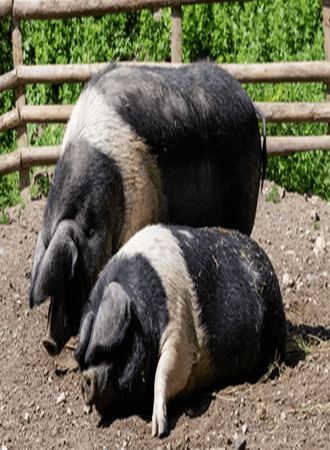
This white belt extends across both forelegs. White hind legs and feet are considered acceptable as long as they don't reach above the hocks. Hampshires are known for having large muscles and prominent ears.
YORKSHIRE
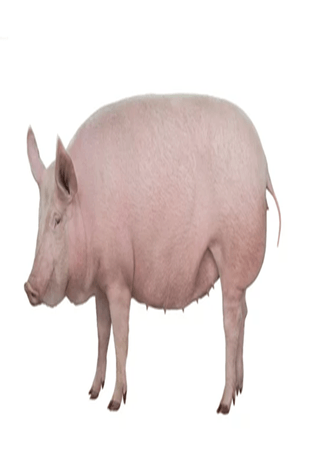
These hogs came from England, where they were bred in two different varieties: the Middle White and the Large White. Large Whites are often the source of Yorkshires used in the United States. These pigs are white swine with elongated bodies. The ears are upright, the hair or bristles are white, and the body is typically white, however occasionally the skin may have some black coloration. Yorkshires are known to be the mother breed because they give birth to large litters.
DUROC
This pig breed is also American. It originated from a hybrid of New York and New Jersey red hog breeds. The resulting offspring became known as Duroc-Jersey. The Duroc in the name refers to a well-known stallion housed on the property of one of New York's red hog breeders at the time.
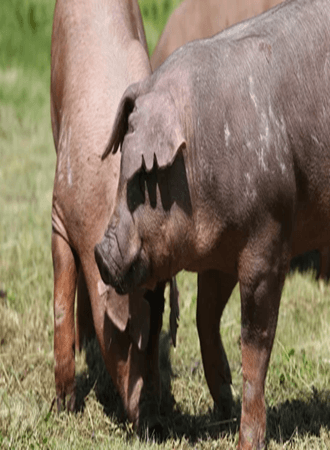
Since then, the breed has been referred to as Duroc instead of Jersey. Durocs might be light or dark in color, but they are always solid red. They develop fast and effectively, and their ears droop.
POLAND CHINA
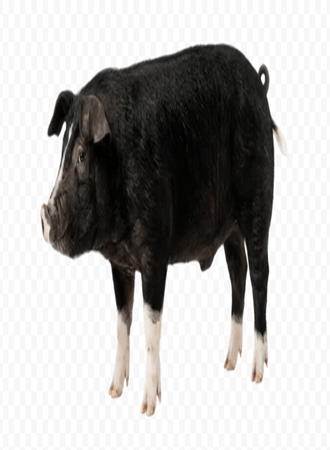
Butler and Warren counties in Ohio are where this pig breed originated, rather than Poland or China. Having six white dots, it is often black in hue. The four legs, tail, and nose make up the six points. Many of this pig breeds have white patches on specific bodily parts. They are renowned for being slender and having large muscles, and they have drooping ears.
SPOT
For many years, this breed was referred to as Spotted Poland China. Although it has a lot more white on its body, it resembles Poland China in appearance. The Spot breed was first created in 1961. It is known for being an active breeder, has drooping ears, and grows weight quickly.
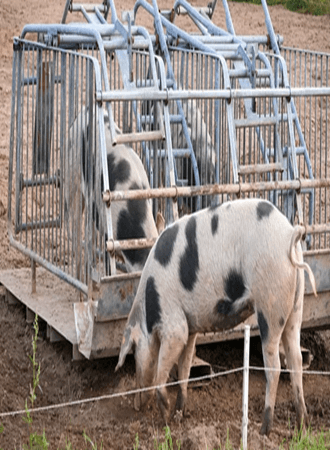
CHESTER WHITE
This American pig breed originated in Pennsylvania's Chester County. "Chester County Whites" are the outcome of swine farmers mating smaller local hogs with imported White English hogs. This breed of pig has medium-sized ears that droop over the eyes, is big and white, and is well-known for being excellent mothers.
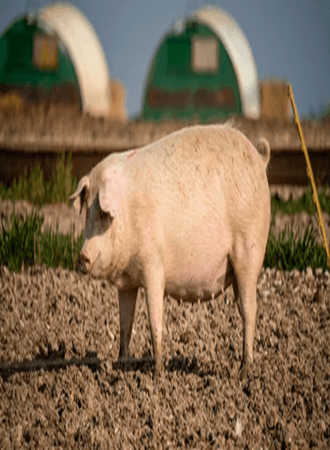
TAMWORTH
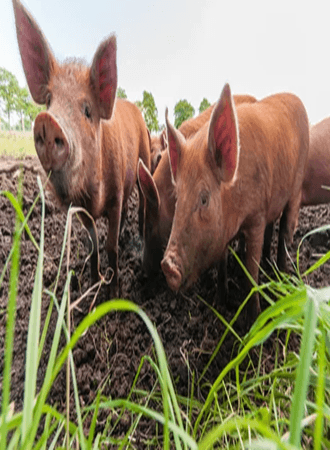
England is where this breed of pig first was introduced. All Tamworths are red, ranging from golden to dark red. They have an elevated ear carriage, a long, thin face, and a snout.
LANDRACE
In the USA, this is one of the more recent pig breeds. Danish Landrace hogs are the ancestors of American Landrace hogs. The American Landrace has a very lengthy body and is completely white. It is similar in color to both the Yorkshire and Chester White, but it has a longer snout than the Yorkshire and a longer body than the Chester. Chester White and Landrace ears want to point downward and forward, but Yorkshire ears are erect.
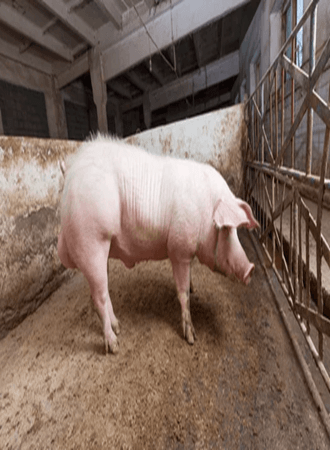
The Landrace is renowned for being an excellent mother and for having particularly large, floppy ears.
BERKSHIRE
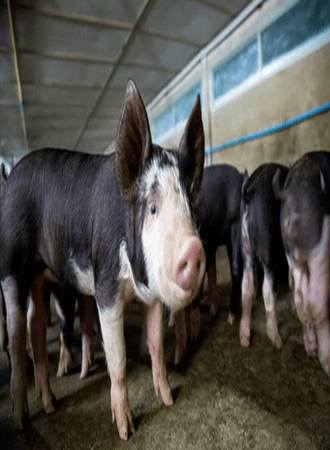
The English county of Berkshire is the origin of this breed. The ears are erect and short. It typically has a splash of white on its face and is black with white feet and white tail.
Pig Breed Selection for Pig Farming in USA
Certain factors or criteria that are important to the pork market in the USA must be considered before selecting the pig breeds to have on a farm. Knowing how the several pig breeds in USA measure against these factors will help in selecting the right pig breeds to have on your farm.
The following are the important factors that are important to the pork market in the USA:
- Growth and carcass merit
- Loin muscle, meat quality characteristics
- Taste
- Fatty acid content
-
Growth and Carcass Merit
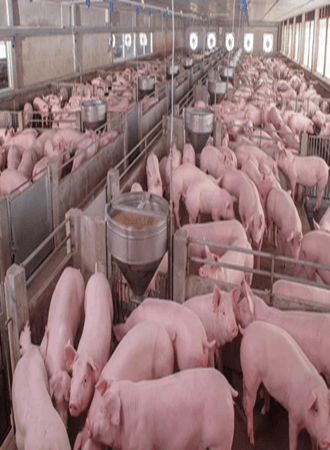
Growth rate and carcass composition are often adversely related to each other. Pigs that grow fast tend to be fatter than pigs that grow slowly, though this relationship is not a strict one-to-one. It shows that pigs that grow faster tended to be fatter.
Some useful metrics used in assessing pigs in this criteria are:
Tenth Rib Backfat: Off-midline backfat thickness measured at the 10th rib
Dressing percent: Calculated as hot carcass weight divided by off-farm weight and multiplied by 100
The table below shows how the different pig breeds in the USA measure up by growth factors:
| Pig Breed | Avg. Daily Gain (lb/day) | Tenth Rib Backfat (inches) |
Dressing Percentage (%) |
| Duroc | 1.79 | 0.90 | 72.4 |
| Landrace | 1.79 | 0.93 | 73.2 |
| Poland China | 1.77 | 1.08 | 72.6 |
| Yorkshire | 1.76 | 0.90 | 73.6 |
| Berkshire | 1.74 | 1.13 | 72.8 |
| Chester White | 1.71 | 1.13 | 73.4 |
| Spotted | 1.71 | 1.02 | 73.4 |
| Hampshire | 1.68 | 0.85 | 73.0 |
The fastest growing pigs were not the fattest, however. Duroc pigs were the fastest growing but were intermediate in backfat thickness and had the lowest dressing percent. Berkshire and Chester White pigs were the fattest pigs. Berkshire pigs, however, were intermediate for growth, and Chester White pigs were somewhat slower growing.
-
Loin Muscle, Meat Quality Characteristics
Pig meat quality can be assessed in many ways. Typically, pig meat quality is quantified by measuring three characteristics of the loin muscle (the muscle that is processed into pork chops): intramuscular fat percent, often referred to as marbling; pH; and color at 24 hours after harvest. Pig meat color is often quantified by using a meter that measures light reflectance. The reported value for light reflectance is called L✶.
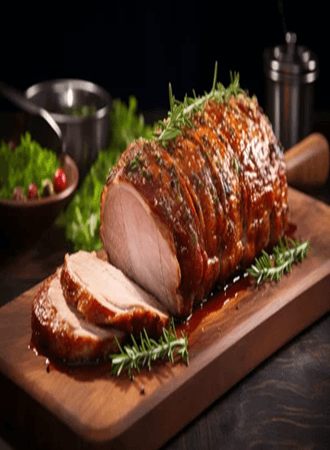
The L✶ measurement has a typical range of 36 to 66. Lower values indicate darker meat (less reflectance); higher values indicate lighter colored or paler meat (greater reflectance). In the U.S., consumers typically prefer pork to be reddish pink (intermediate L✶ values).
The pH is a measure of acidity or alkalinity. The range of pH values is from 1 to 14. A pH value of 7.0 is neutral– neither acidic nor alkaline. Values below 7 indicate more acidic meat, and values above 7, more alkaline. The typical range in pH values observed in pork loins 24 hours after harvest is 5.0 to 6.8. Pork loins with higher pH values tend to hold water better than those with lower pH values. This causes less drip loss or purge in the storage and display of fresh meat, and typically improves cooking and curing attributes.
Intramuscular fat percent or marbling is measured as the percent fat within the muscle. It is often thought that marbling has a relationship to flavor. Within most U.S. markets, 2 to 3 percent intramuscular fat is typically preferred in loin chops. Overall, high quality pork loins are considered to have higher than average pH values, lower L✶ values (darker), and average or above average percentage of intramuscular fat.
The table below provides a summary from the National Barrow Show Progeny Test for loin muscle intramuscular fat percent, pH and color (represented as L✶) at 24 hours after harvest.
| Pig Breed | Intramuscular Fat (%) | pH at 24 hours after harvest |
Objective Color CIE L* |
| Duroc | 3.07 | 5.58 | 51.6 |
| Berkshire | 2.51 | 5.68 | 49.8 |
| Chester White | 2.39 | 5.70 | 51.3 |
| Spotted | 2.37 | 5.55 | 51.9 |
| Poland China | 2.18 | 5.61 | 50.9 |
| Hampshire | 2.09 | 5.58 | 49.0 |
| Landrace | 1.90 | 5.47 | 54.2 |
| Yorkshire | 1.70 | 5.47 | 53.4 |
The Duroc, Berkshire and Chester White breeds had the most intramuscular fat (marbling) and the highest pH. They also tended to have darker loin chops. However, the darkest loin chops were from Hampshire pigs, even though they were intermediate for pH
-
Taste Panel Characteristics
To better understand how the various attributes of pork may affect consumer experience, taste panels evaluate various criteria of cooked pork.
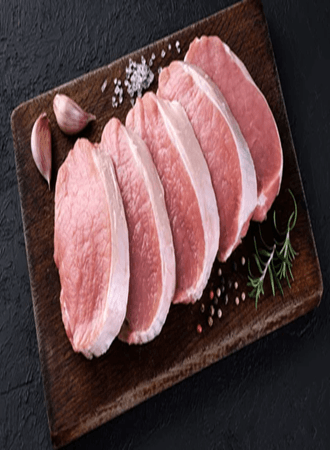
These typically include tenderness, juiciness and pork flavor. Persons who serve on such panels are trained to distinguish a range of differences in these attributes. Panelists are given small samples to evaluate and then score each sample for these characteristics.
Higher value scores typically indicate a more desirable attribute. The table below are results from a trained panel that evaluated tenderness and juiciness of pork chops from traditional breeds. Higher values indicate more desirable tenderness or juiciness
| Pig Breed | Tenderness | Juciness |
| Berkshire | 7.3 | 6.1 |
| Hampshire | 6.8 | 5.8 |
| Chester White | 6.6 | 5.8 |
| Landrace | 6.6 | 5.0 |
| Duroc | 6.3 | 5.4 |
| Poland China | 6.3 | 5.4 |
| Yorkshire | 6.3 | 4.9 |
| Spotted | 5.9 | 5.3 |
The Berkshire, Hampshire, Chester White and Landrace breeds produced the more tender pork chops among the eight breeds. The Landrace breed produced loin chops that were not juicy, even though they were above average for tenderness. The Duroc breed was intermediate for both tenderness and juiciness.
-
Fatty Acid Profile of Loin Muscle
The fatty acid content of pig loin muscle is a concern for consumers for health reasons. Fatty acids in pig loin muscle is of two types: saturated fatty acid and unsaturated fatty acid.
Saturated fat is a type of dietary fat whose carbon atoms are completely filled ("saturated") with hydrogen atoms. Consuming foods with high content of saturated fatty acids can raise the levels of bad cholesterol (LDL) in the blood.
Unsaturated fat is a type of dietary fat containing one or more double bonds in its carbon chain, making it liquid or soft at room temperature. Foods with unsaturated fat content help improve blood cholesterol levels and lower heart disease risk.
The tables below show the saturated and unsaturated fatty acid content of the pig breeds in the US:
| Pig Breed | Total Saturated Fatty Acid (g/100g of Lipid) |
| Duroc | 400.50 |
| Berkshire | 380.68 |
| Chester White | 380.73 |
| Yorkshire | 380.33 |
| Landrace | 380.13 |
| Poland China | 370.99 |
| Spotted | 370.42 |
| Hampshire | 370.21 |
| Pig Breed | Total Poly Unsaturated Fatty Acid (g/100g of Lipid) |
| Hampshire | 130.84 |
| Landrace | 130.16 |
| Yorkshire | 130.10 |
| Spotted | 110.55 |
| Chester White | 100.79 |
| Poland China | 100.41 |
| Berkshire | 110.10 |
| Duroc | 90.61 |
The Duroc breed had the highest estimate of total saturated fatty acids and the lowest estimate for polyunsaturated fatty acids. Conversely, the Hampshire breed had the lowest saturated fatty acid content in loin muscle and the highest loin muscle polyunsaturated fatty acid content. The Poland China breed had low estimates of both saturated fatty acid and polyunsaturated fatty acid content in loin muscle.
Sources and References
Swine Breeding Systems for Alternative Pork Chains: Breed Options and Use—Michigan State University





Share This Article: